
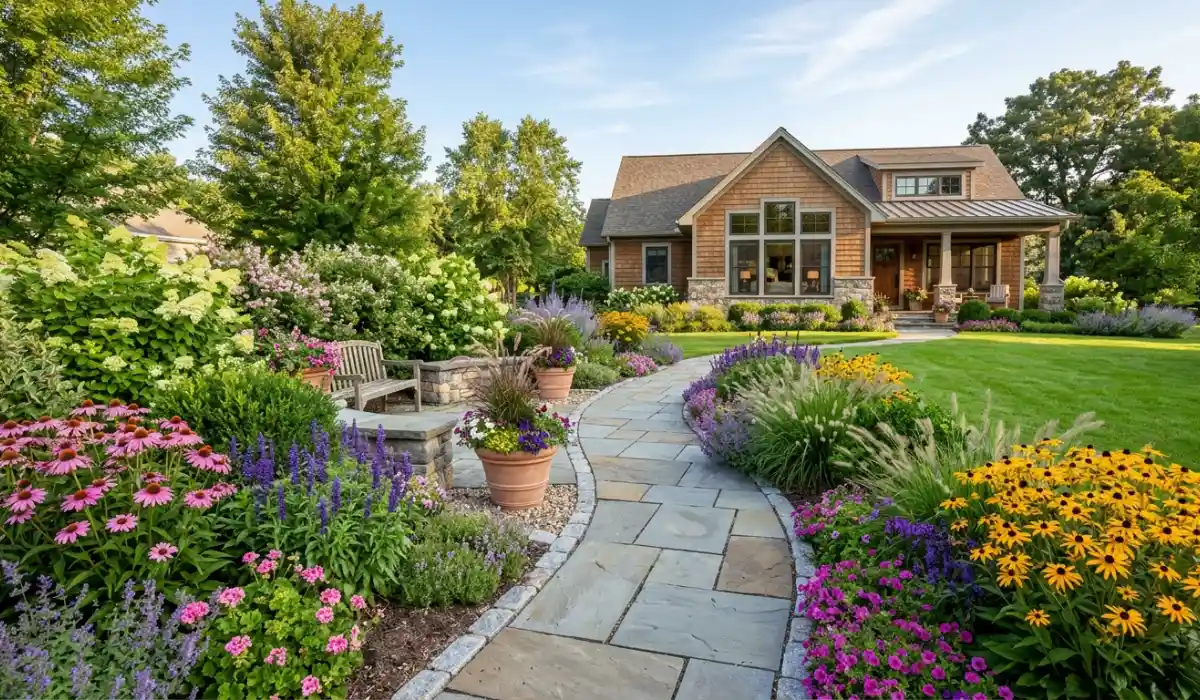
Choosing the right plants can transform an ordinary outdoor space into a colorful, welcoming garden. The best garden plant ideas combine flowers, shrubs, ornamental grasses, foliage plants, and ground covers that suit your climate, sunlight, soil, and available space. Whether you have a spacious backyard, a narrow side yard, a front entrance, or a small patio, thoughtful plant selection can make your landscape more attractive and easier to maintain.
For homeowners in the United States, the key is to choose plants that thrive in local growing conditions rather than selecting varieties based on appearance alone. A combination that performs well in a sunny California yard may not suit a shaded New England garden or a humid Southern landscape.
From colorful flower beds and low-maintenance native plants to container displays and pollinator-friendly borders, these garden plant ideas offer practical inspiration for creating an outdoor space that looks good throughout the growing season.
Best Garden Plant Ideas for a Beautiful Landscape
A successful garden does not need dozens of different plant varieties. A few carefully selected species can create a balanced landscape when their colors, heights, textures, and growing requirements work together.
Consider these combinations when planning a new garden bed or improving an existing landscape.
| Garden style | Plant combination | Best location |
|---|---|---|
| Colorful flower bed | Coneflowers, black-eyed Susans, and salvia | Sunny borders |
| Cottage garden | Roses, phlox, and ornamental grasses | Front or backyard |
| Woodland garden | Ferns, hostas, and woodland phlox | Shaded areas |
| Drought-tolerant garden | Lavender, yarrow, and suitable native grasses | Dry, sunny spaces |
| Pollinator garden | Regionally native flowers with overlapping bloom times | Open garden beds |
| Container garden | Petunias, angelonia, and trailing plants | Patios and balconies |
These combinations are starting points rather than universal planting recipes. Check each plant’s mature size, hardiness, sunlight needs, and water requirements before combining varieties. Garden design resources emphasize choosing plants that work together in both appearance and growing conditions.
Colorful Flower Garden Plant Ideas
Flowering plants add color, attract attention, and help define garden beds. For an attractive display, combine flowers with different shapes and heights instead of planting every variety in a single row.
1. Purple Salvia and Pink Coneflowers
Purple salvia creates upright flower spikes, while pink or purple coneflowers add larger blooms and prominent central cones. This combination works well in sunny borders where both plants suit the local conditions.
Add ornamental grasses or a low-growing ground cover to fill the spaces between flowers. Repeat groups of the same plants along the border to create a connected design rather than a scattered appearance.
2. Black-Eyed Susans and Purple Coneflowers
Black-eyed Susans bring golden-yellow flowers, while purple coneflowers provide contrasting color and a different flower shape. These plants can be useful choices for a natural-looking perennial border when the selected species are suitable for the region.
Leave enough room for mature plants to spread. Overcrowded flower beds can become difficult to maintain and may prevent plants from reaching their expected size.
3. Roses With Companion Plants
Roses can serve as focal points in a formal or cottage-style garden. Pair them with low-growing perennials, compact ornamental grasses, or plants that offer complementary foliage.
Choose companions according to the rose variety’s mature size, light requirements, and watering needs. Avoid crowding roses with vigorous plants that compete for space or obstruct airflow.
Low-Maintenance Garden Plant Ideas
A beautiful garden does not have to require constant watering, trimming, and replanting. The most practical low-maintenance garden plant ideas begin with plants adapted to the local climate and soil.
Consider the following options:
- Lavender: Suitable for many sunny gardens with well-drained soil, depending on the species and climate.
- Yarrow: A flowering perennial with finely divided foliage that can suit sunny, well-drained sites.
- Ornamental grasses: Add movement, height, and texture. Select species appropriate for your region and available space.
- Native perennials: Often well suited to local conditions when the species is matched to the site.
- Ground covers: Help fill open spaces and reduce the need for frequent mowing in selected areas.
Low maintenance does not mean no maintenance. Newly planted gardens still need appropriate watering, weed control, and monitoring while roots become established.
How to Design a Low-Maintenance Border
Start with a small number of reliable plants. Position taller varieties toward the back of a border, medium-height plants in the middle, and shorter varieties along the front where they will not be hidden.
Use plants with similar moisture requirements in the same area. This makes watering easier and reduces the risk of keeping drought-tolerant plants too wet or moisture-loving plants too dry.
Native Plant Garden Ideas for American Homes
Native plants can bring regional character to a landscape while providing food or habitat for local wildlife. Their suitability depends on the state, local ecosystem, soil, and growing conditions.
For a native planting, consider regionally appropriate species such as:
- Eastern United States: Purple coneflower, black-eyed Susan, and native wild bergamot may suit certain sites.
- Midwestern and prairie regions: Native coneflowers, prairie grasses, and regionally appropriate milkweeds can form naturalistic plantings.
- Southwestern states: Some native penstemons, blanketflowers, and drought-adapted grasses suit dry, sunny locations.
- Pacific and western regions: Regional native sages, buckwheats, and other locally appropriate flowering plants can work in suitable conditions.
These are examples, not recommendations for every garden within those regions. Native ranges and site requirements vary, so confirm that each species belongs in your local ecosystem before planting.
Create a Pollinator-Friendly Garden
Bees, butterflies, and other pollinators benefit from gardens that provide suitable flowers and habitat. The USDA Natural Resources Conservation Service recommends planning for flowers that bloom across the growing season, grouping the same plant species together, and retaining appropriate nesting habitat for native bees
For a more useful pollinator planting:
- Choose flowers with overlapping spring, summer, and fall bloom periods.
- Plant several individuals of suitable species together.
- Include native host plants where appropriate for local butterflies.
- Avoid unnecessary insecticide use and ask nurseries about plant treatments.
- Preserve some suitable habitat for nesting and overwintering wildlife.
This approach can create a garden that looks attractive while serving a practical ecological purpose.
Shade Garden Plant Ideas
Shady spaces beneath trees, beside fences, or along the north side of a home can still support beautiful planting designs. The key is distinguishing between full shade, partial shade, and areas that receive a few hours of direct sunlight.
Hostas and Ferns
Hostas offer broad foliage in a range of green, blue-green, and variegated patterns. Ferns contribute delicate leaf textures that contrast with the hostas’ larger leaves.
This pairing works in many shaded garden settings, provided the selected varieties suit the local climate and soil moisture. Keep larger plants toward the back and smaller varieties near the edge of the bed.
Woodland Phlox and Native Ground Covers
Woodland phlox can provide seasonal flowers in suitable shaded or partly shaded sites. Pair it with locally appropriate ground covers or ferns to create a layered woodland effect.
Before planting beneath mature trees, check how much moisture reaches the soil. Tree roots can compete strongly for water, so some shaded locations may be drier than they appear.
Tips for Planning a Shade Garden
- Observe the site at different times of day.
- Check soil moisture after rain and during dry weather.
- Select plants for the actual amount of sunlight they receive.
- Avoid digging deeply around established tree roots.
- Use contrasting leaf shapes to create interest even when few plants are flowering.
Small Garden Plant Ideas for Patios and Compact Yards
Small gardens benefit from thoughtful plant placement rather than a large number of varieties. A compact planting scheme can make a balcony, patio, narrow side yard, or small front entrance feel more inviting.
Try these ideas:
- Vertical planting: Use suitable climbing plants on a secure trellis to draw attention upward.
- Compact shrubs: Choose varieties whose mature dimensions fit the available space.
- Container groupings: Combine pots of different heights while keeping the plants’ light and water requirements compatible.
- Repeated planting: Repeat a few varieties to make a small space feel organized.
- Narrow borders: Use upright plants behind shorter flowers or ground covers to preserve walking space.
Choose Plants for Containers
Container gardening makes it possible to grow flowers where there is little or no ground space. Petunias, angelonia, and suitable trailing plants can create colorful displays in sunny locations. Shade-tolerant options should be selected for covered patios and sheltered entrances.
Use containers with drainage holes and a growing medium designed for pots. Small containers generally dry out faster than larger ones, so their watering needs deserve particular attention.
Garden Plant Ideas for Different Seasons
A garden that relies on one brief flowering period can look bare during the rest of the year. A better design combines plants with different flowering seasons and foliage characteristics.
| Season | Planting ideas | Design goal |
|---|---|---|
| Spring | Suitable flowering bulbs, woodland phlox, and spring-blooming shrubs | Welcome early color |
| Summer | Coneflowers, salvia, roses, and suitable annuals | Create strong flower displays |
| Fall | Regionally suitable asters, goldenrods, and ornamental grasses | Extend seasonal interest |
| Winter | Evergreen shrubs, selected conifers, and plants with attractive stems | Preserve structure |
Local climate determines which plants will thrive and when they flower. In colder regions, winter structure may be especially important. In warmer areas, heat tolerance and seasonal rainfall may matter more.
When selecting plants, consider foliage color, seed heads, bark, and evergreen structure as well as flowers. These details help the garden remain visually interesting after the main flowering season ends.
How to Choose the Right Plants for Your Garden
The best planting plan starts with the site itself. Before buying plants, assess the following factors.
1. Check Your USDA Plant Hardiness Zone
The USDA Plant Hardiness Zone Map helps gardeners identify the average annual extreme minimum winter temperature for a location. It is a useful starting point for choosing perennial plants, shrubs, and trees, but it does not account for every factor that affects plant success.
Also consider summer heat, humidity, rainfall, wind exposure, and local soil conditions.
2. Understand Sunlight Requirements
Observe the area before selecting plants. Full-sun locations, partly shaded beds, and deeply shaded areas support different plant choices.
Do not assume that a garden near a house receives the same light throughout the year. Trees, fences, roof overhangs, and neighboring buildings can change exposure significantly.
3. Evaluate Soil and Drainage
Some plants prefer consistently moist soil, while others need good drainage and can struggle in waterlogged ground. Observe how quickly the area drains after rainfall and consider a soil test if you are unsure about soil conditions.
Choose plants that suit the existing site whenever possible instead of trying to force every variety to grow in unsuitable conditions.
4. Plan for Mature Plant Size
A plant that looks small in a nursery pot may eventually occupy a large area. Read plant labels for mature height and spread, then leave enough space for growth.
This is particularly important near foundations, walkways, fences, and windows. Proper spacing can reduce future pruning and help maintain a balanced landscape.
5. Match Water Needs
Group plants with similar water requirements. Drought-tolerant varieties are often easier to manage when they are not planted beside species that require frequent moisture.
New plantings may need more attention than established plants, even when they are described as low maintenance.
Common Mistakes to Avoid When Planning a Garden
Even attractive plants can produce disappointing results when they are poorly matched to the site.
Avoid these common mistakes:
- Choosing plants only for their flowers: Consider foliage, mature size, seasonal interest, and maintenance needs too.
- Ignoring local growing conditions: A popular plant may not tolerate your area’s winter temperatures, summer heat, or soil.
- Mixing incompatible water requirements: Plants in the same bed should have reasonably compatible moisture needs.
- Planting too closely: Crowded plants can compete for space and become harder to maintain.
- Using too many unrelated varieties: Repeating a few plants often creates a more cohesive design.
- Forgetting winter appearance: Include suitable evergreen plants, grasses, or other structural elements if year-round interest is important.
- Overlooking invasive potential: Check local guidance before planting species that spread aggressively.
Thoughtful planning at the beginning can save money and prevent unnecessary replacements later.
Conclusion
The most successful garden plant ideas combine attractive design with practical plant selection. Colorful perennials, native flowers, shade-loving foliage, compact shrubs, and container plants can all contribute to a beautiful outdoor space when they suit the conditions in which they grow.
Start by assessing sunlight, soil, drainage, local climate, and available space. Then choose a manageable combination of plants with complementary colors, textures, heights, and flowering periods. For homeowners across the United States, selecting regionally suitable plants and planning for mature growth can help create a garden that remains appealing and manageable over time.
Frequently Asked Questions
What are the best plants for a beautiful home garden?
The best choices depend on your location and garden conditions. Coneflowers, salvia, black-eyed Susans, hostas, ferns, ornamental grasses, and suitable flowering shrubs can all work well in the right setting.
Which garden plants are easiest to maintain?
Regionally appropriate native perennials, suitable ornamental grasses, and well-matched shrubs can be relatively easy to maintain once established. Their actual care requirements depend on the species, climate, soil, and growing location.
What plants grow well together in a flower bed?
Pair plants with similar sunlight, soil, and water requirements. For example, purple salvia and coneflowers can work together in a suitable sunny border, while hostas and ferns can complement each other in a shaded garden.
How can I make a small garden look attractive?
Use a limited plant palette, repeat selected varieties, combine different heights, and use containers or vertical planting where appropriate. Keep pathways clear and choose plants that will not outgrow the available space.
Which plants attract butterflies and bees?
Suitable native flowering plants, including regionally appropriate coneflowers, milkweeds, bee balms, and asters, can provide resources for pollinators. Select species suited to your area and aim for overlapping bloom periods.
How do I choose plants for a low-water garden?
Start with plants adapted to your local rainfall and soil drainage. Depending on your region, suitable options may include lavender, yarrow, native grasses, and drought-adapted native perennials. Newly planted specimens still need appropriate establishment care.
Can I grow attractive garden plants in pots?
Yes. Petunias, angelonia, compact flowering plants, and suitable foliage varieties can grow in containers. Choose a pot with drainage holes and match the plants to the available sunlight, container size, and watering routine.
When is the best time to plant garden flowers?
The ideal planting time depends on the plant species and local climate. Many gardeners plant hardy perennials during favorable spring or fall conditions, while warm-season annuals are generally planted after the danger of frost has passed. Check the recommended planting time for your area before starting.