
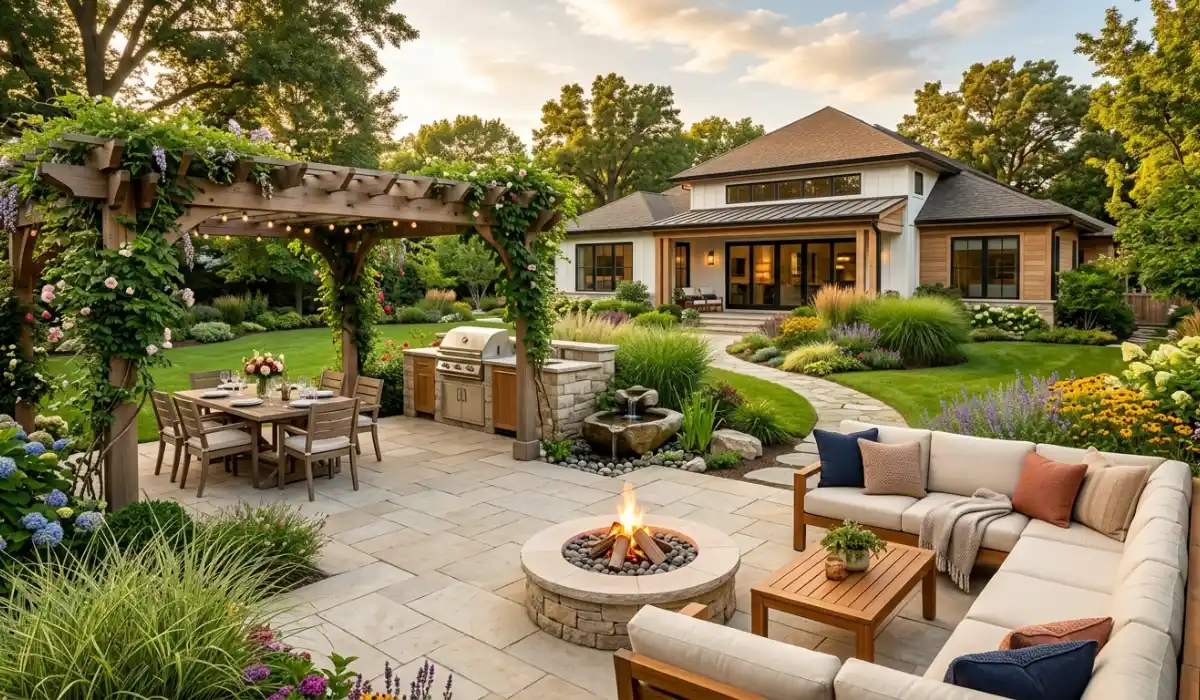
Outdoor spaces can turn an ordinary backyard renovation decoradyard, patio, garden, or porch into a comfortable place for relaxing, entertaining, dining, and enjoying nature. The most successful designs combine practical layouts, comfortable furniture, suitable landscaping, and thoughtful details that make the area useful throughout the year.
You do not need an enormous backyard or an expensive renovation to create an inviting outdoor environment. A compact patio can become a peaceful reading corner, while a larger yard can accommodate separate areas for cooking, gathering, gardening, and recreation.
The key is to design around your available space, local climate, personal style, and everyday activities. Whether you prefer contemporary landscaping, a rustic garden retreat, or a covered outdoor living room, the following ideas can help you create an attractive and functional extension of your home.
What Are Outdoor Spaces and Why Do They Matter?
Outdoor spaces are areas outside a home that are designed or maintained for recreation, relaxation, gardening, entertainment, and everyday activities. They may include patios, decks, balconies, terraces, porches, courtyards, lawns, and landscaped gardens.
These areas can serve many of the same purposes as indoor rooms while offering an open-air environment and a closer connection to nature.
For example, a covered patio can function as a second living room, while a landscaped courtyard can provide privacy and a peaceful place to unwind.
The Benefits of a Well-Designed Outdoor Living Area
A thoughtfully arranged exterior area offers several advantages.
- Additional usable space: Patios, decks, and porches provide room for dining, seating, and family activities without necessarily expanding the home’s enclosed floor area.
- Better opportunities for relaxation: Comfortable seating surrounded by greenery creates a pleasant setting for reading, conversation, and quiet time.
- More room for entertaining: Outdoor dining tables, cooking stations, and lounge furniture make gatherings easier to accommodate.
- Improved visual appeal: Coordinated materials, plants, lighting, and landscape features can make a property feel more attractive.
- Flexible everyday use: A single area can support morning coffee, afternoon activities, and evening gatherings.
- A stronger connection with nature: Trees, flowers, garden beds, and natural materials bring seasonal interest into everyday living.
The value of these improvements depends on how well they fit the household. A simple shaded seating area that receives daily use may be more worthwhile than an elaborate outdoor kitchen that rarely gets used.
15 Inspiring Outdoor Spaces Ideas for Your Home
There are many ways to design an outdoor area, and the right option depends on the property’s dimensions, your budget, and how you intend to use it.
The following ideas cover everything from traditional patios to contemporary entertainment areas and peaceful garden retreats.
1. Comfortable Backyard Patios
A Simplified Guide to Choose best Stone Pavers for Your Patio
14 Charming Small Patio Seating Ideas for Cozy Outdoor Spaces – Plantparadiso
Natural Stone Pavers for Sale in Ohio
15
A backyard patio is one of the most flexible additions to a residential landscape. It creates a defined surface for outdoor furniture while connecting the house with the surrounding garden.
Patios can be built using concrete, brick, natural stone, or properly installed paving systems. Each option provides a different appearance and maintenance requirement.
For a welcoming arrangement, place a weather-resistant sofa opposite two accent chairs and position a low coffee table between them.
Add planted borders to soften the edges and an umbrella or other suitable shade structure for comfort during sunny afternoons.
Design tip: Keep the main seating area close to the house if it will be used frequently for meals, drinks, or family gatherings.
2. Elevated Decks With Beautiful Views
Deck Materials Guide Boise | Composite, Wood, PVC Comparison
Modern Wine Country Cottage in Historic Healdsburg, Premiere Location – Sonoma County | Vrbo
The Transformation of a Saint Heliers Deck and BBQ Area for Year-Round Outdoor Entertainment | Project
15
Decks are particularly useful when a home has an elevated entrance, uneven ground, or a location with attractive views.
Wood decking creates a traditional, warm appearance, while composite boards offer an alternative with different cleaning and maintenance requirements.
Depending on the layout, a deck can accommodate:
- A dining table and chairs
- An outdoor sectional sofa
- Built-in benches
- Large decorative planters
- Low-glare lighting
- A covered relaxation area
Raised decks need appropriate structural design, foundations, stairs, guardrails, and connections to the house. Local construction requirements should be checked before installation.
3. Covered Outdoor Living Rooms
120 Mystic Shores, Spring Branch, TX 78070 | MLS #1907294 | Zillow
New Home Community Toll Brothers at Flat Creek in Castroville, TX
4177 PRADO DE LOS PAJAROS, Calabasas, CA 91302 | Redfin
15
A covered outdoor living room combines the comfort of indoor furniture arrangements with the atmosphere of a garden or backyard.
The roof provides shelter from direct sunlight and some weather conditions, making the area more versatile than a completely exposed patio.
Use outdoor-rated upholstered seating, a durable rug, side tables, and appropriate lighting to create a comfortable room-like setting.
A ceiling fan designed for the installation location can improve comfort in suitable weather, while retractable screens may help manage insects or glare.
Choosing the Right Roof Style
The roof should complement the home’s existing architecture rather than look like an unrelated addition.
Common designs include:
- Hip roofs: Sloping roof planes on all sides create a balanced architectural appearance and can complement homes with existing hip roofs.
- Gable roofs: A pitched roof with triangular end walls creates an open, traditional appearance.
- Shed roofs: A single-sloped roof offers a simpler profile that often suits contemporary extensions.
- Pergola-style coverings: Open beams or louvers provide varying amounts of shade, depending on the design.
A new attached roof requires careful consideration of structural loads, connections, waterproofing, and drainage.
For homes with hip roof architecture, a professionally designed covered patio can maintain a consistent exterior appearance while expanding the sheltered living area.
4. Pergolas and Gazebos for Shaded Retreats
14 Beautiful Pergola Ideas to Finally Upgrade Your Backyard | Garden Edging Ideas
Pergola Builder Atlanta, GA | Custom Wood & Vinyl Pergolas | Peachy Decks
Modern Outdoor Dining Terrace with Slatted Timber Shade & Woven Dining Chairs | Splitshire
9
Pergolas and gazebos are excellent options for creating recognizable gathering areas within a yard.
A traditional pergola has an open framework supported by posts, although some modern designs include adjustable louvers or weather-resistant coverings.
Gazebos generally have a more enclosed overhead roof and may feature railings, decorative trim, or screened sides.
A pergola works beautifully over an outdoor dining area, while a gazebo can become a quiet garden retreat.
Climbing vines, planted borders, and carefully positioned lighting help connect these structures with the surrounding landscape.
5. Outdoor Kitchens and Dining Areas
Creer une cuisine exterieure : conception, materiaux et budget | GrillKing
324 S Medio Dr, Los Angeles, CA 90049 | MLS# 26632241 | Redfin
Pergola Hosting Tips – Pergola Pros LLC
11
Outdoor kitchens make cooking and entertaining part of the backyard experience.
A basic arrangement might include a freestanding grill, a preparation table, and a nearby dining set. More elaborate installations can incorporate countertops, cabinets, refrigerators, sinks, and built-in cooking equipment.
Keep the layout practical. The person cooking should have convenient access to preparation surfaces without forcing guests to walk through the active cooking area.
Select materials and appliances rated for exterior exposure, and protect electrical components from weather.
Safety consideration: Grills should remain outdoors and well away from combustible materials, deck railings, and roof overhangs. Never use a charcoal or propane grill inside an enclosed room or beneath a covering where its installation is prohibited. U.S. Fire Administration
6. Cozy Fire Pit Lounges
13 Cozy Outdoor Fire Pit Area Ideas for Backyard Gatherings | Garden Edging Ideas
10 Small Backyard Fire Pit Ideas Landscaping: Transform Your Outdoor Space – Plant America
Seating Walls & Garden Walls Indianapolis, IN | B&F Landscaping | B&F Landscaping
14
A fire pit creates a natural gathering point for cool evenings.
Arrange chairs around a central fire feature so guests can face one another and enjoy conversation. Gravel, stone, or other appropriately installed noncombustible surfaces can help define the area.
Fire pits are available in different forms, including portable wood-burning models, permanent masonry installations, and gas-fueled designs.
Before purchasing one, check local fire restrictions and the manufacturer’s required clearances.
The U.S. Fire Administration recommends keeping outdoor fire pits and fireplaces at least 10 feet from homes and combustible materials. Additional local or product-specific requirements may be stricter. U.S. Fire Administration
7. Peaceful Garden Retreats and Reading Corners
20 Garden Nook Ideas for Backyard | Garden Lighting
16+ Inspiring Outdoor Environment Ideas
Как правильно обустроить место для чтения в саду советы от GardenDecor
10
Not every backyard area needs to accommodate a crowd.
A secluded garden corner can provide a peaceful escape with only a comfortable chair, small table, and attractive plants.
Position seating where trees, shrubs, or fencing provide a sense of privacy. Add scented flowers where suitable, and choose plants that thrive under the area’s sun and soil conditions.
A short stepping-stone path can make the retreat feel distinct from the rest of the landscape.
For added character, include a small garden sculpture, decorative container, or birdbath that can be cleaned and maintained regularly.
8. Small Courtyards and Compact Outdoor Areas
23 Backyard Landscaping Ideas | LawnBySeason
St Kilda Courtyard — Ashley James Ashley James Gardens
Vila Serrana | Apartamentos em Serra | MRV
13
Small outdoor spaces can be both attractive and functional when every element has a purpose.
Instead of filling a narrow courtyard with oversized furniture, choose pieces that allow people to move comfortably.
A wall-mounted folding table, slim bench, or compact bistro set may provide enough seating without crowding the area.
Vertical planters and climbing plants introduce greenery while preserving valuable floor space.
Use a limited material and color palette to make the courtyard feel visually connected.
9. Rooftop Terraces and Balconies
TERRACE LIST — Evan C. Lai Landscape Design, Inc.
25 Boulevard Charles Floquet, 93600 Aulnay-sous-Bois : Prix m² et Ventes – Février 2026
HomeViews | South East London Reviews
16
Rooftop terraces and balconies can provide enjoyable exterior areas for homes with limited ground-level space.
Compact seating, lightweight decorative accessories, and containers suited to the location make these spaces more inviting.
However, rooftop projects require extra attention to structural capacity, waterproofing, wind exposure, drainage, and safe access.
Heavy planters, large furniture, pergolas, or permanent paving should not be installed without confirming that the structure can support the loads.
For a balcony, review building rules and avoid making changes to railings or drainage systems without appropriate authorization.
10. Modern Poolside Lounges
Stylish Pool Lounge Ideas for the Perfect Outdoor Oasis
Villa Contemporanea | Proyectos | Zdenka Lara Interiorismo
Trending Now: Beautiful Pools To Beat The Summer Blues
12
A poolside lounge provides a place for relaxation beyond the swimming area.
Weather-resistant loungers, umbrellas, planted borders, and a convenient side table can create a resort-inspired setting.
Choose suitable slip-resistant surfaces and maintain clear walking routes around the pool.
Safety must remain a primary design consideration. Pool fencing, self-closing and self-latching gates, and other protective measures should follow applicable local requirements.
Decorative furniture and landscaping should never obstruct required barriers or provide easy climbing access over them.
11. Family-Friendly Play and Recreation Areas
30 Kid-Friendly Backyard Ideas That Parents Will Love Too — Yardcast Blog
KI-Hinterhof-Design – Kostenloser Generator zur Online-Gartengestaltung
Backyard Ideas for Families: Kid-Friendly Play Zones + Adult Spaces — Extreme Kids World
13
A family-friendly yard should balance open activity areas with seating and supervision.
A lawn, appropriately installed play equipment, or a dedicated recreation corner can help organize children’s activities.
Select play equipment suitable for the children’s ages and install impact-attenuating surfacing as recommended by the manufacturer and applicable safety guidance.
Keep potentially hazardous elements, including fire features, open water, and gardening chemicals, separated from play areas.
Adults should also have a comfortable place to sit with a clear view of the activity zone.
12. Beautiful Water Features and Garden Fountains
Small Courtyard Garden Ideas to Transform Tight Spaces — Fountainland
How To Build a Wildlife Pond in Your Backyard | Gardening Know How
15 Modern Small Garden Ideas for Urban Retreats
11
Water features introduce movement and visual interest into a landscape.
A compact recirculating fountain can become a focal point near a seating area, while a carefully planned pond may support a more natural garden design.
Choose a feature that matches your willingness to maintain pumps, filters, water quality, and surrounding vegetation.
Avoid positioning fountains where spray could create slippery walking surfaces or damage nearby building materials.
Standing water also requires maintenance to discourage mosquitoes and other problems.
13. Outdoor Spaces With Vertical Gardens and Green Walls
20 Outdoor Living Room Ideas | Garden Lighting
How to Create Privacy in a Small Urban Garden | Houzz IE
19+ Inspiring Cedar Trellis Ideas for Your Garden
13
Vertical gardens can transform a plain wall or fence into a decorative landscape feature.
They are particularly helpful in compact areas where ground-level planting beds would occupy too much room.
Consider wall-mounted containers, freestanding planting frames, or trellises for suitable climbing plants.
Herbs can be grown near an outdoor cooking area when sunlight and watering conditions support their growth.
Before installing a planted wall, consider the weight of wet soil, watering access, drainage, and potential moisture exposure to the building.
14. Outdoor Showers and Spa-Inspired Retreats
Dramatic New Kukui’ula Estate: Dazzling Style + Seaviews + Unique Pool & Spa – Koloa | Vrbo
15 Backyard Hot Tub Ideas for Relaxing Outdoor Spaces
Hot Tub Landscaping Ideas | Re-Design
16
An outdoor shower can be useful near a swimming pool, beach house, or gardening area.
Natural stone, timber-look materials, and privacy screens can create a calm, spa-inspired appearance.
A hot tub or similar wellness feature requires more planning because of its significant weight, electrical requirements, water management, and ongoing maintenance.
Place these features where privacy, accessibility, drainage, and safe connections can be addressed.
Choose surfaces that remain suitable when wet, and follow local requirements for plumbing, electrical installations, and safety barriers.
15. Multi-Purpose Outdoor Entertainment Areas
Entertaining Outdoors: Layouts That Actually Work for Real Families
5 bedroom detached house for sale in Clophill Road , Maulden , Maulden , Bedfordshire, MK45 2AE, MK45
DIY Backyard Movie Screen and Projector Setups | Outdoor Activities | Optic Weather
17
A larger yard can support several activities without requiring each one to occupy a separate enclosed structure.
For example, an outdoor lounge can sit beside a dining terrace, with a garden path leading toward a quiet sitting area.
The different zones should feel connected through repeated materials, colors, plantings, or lighting.
A portable projector, flexible furniture, and movable tables allow the arrangement to change for family gatherings or special occasions.
Avoid installing permanent entertainment equipment until you have considered weather protection, electrical safety, and the effect of noise and lighting on neighboring properties.
How to Design Outdoor Spaces That Look Beautiful and Function Well
An attractive backyard needs more than furniture and decorative plants. Its layout should support everyday activities while accounting for sunlight, weather, privacy, movement, and maintenance.
Planning these details before construction can prevent uncomfortable seating arrangements, awkward walking routes, and unnecessary changes later.
Start With the Purpose and Available Space
Begin by deciding which activities matter most to your household.
For example, someone who enjoys hosting weekend dinners may prioritize a dining patio, while someone seeking a peaceful retreat may prefer a shaded garden bench.
Measure the available area and identify existing features that will remain, including trees, walkways, fences, utility connections, and drainage points.
Create a simple sketch showing:
- The house and exterior entrances
- Existing landscape features
- Sunny and shaded areas
- Potential seating locations
- Walking paths
- Garden beds and planting zones
- Proposed structures and activity areas
This initial plan helps determine whether your ideas can fit comfortably without overcrowding the property.
Divide the Yard Into Functional Zones
Creating distinct activity zones makes outdoor spaces easier to organize and enjoy.
A typical backyard might include a dining area near the kitchen, a lounge farther into the garden, and a separate recreation area.
Use changes in paving materials, planted borders, furniture arrangements, or subtle differences in elevation to distinguish these zones.
Avoid unnecessary barriers. The goal is to create recognizable areas while maintaining comfortable movement between them.
Consider Sunlight, Shade, and Privacy
Sun exposure influences when and how comfortably an area can be used.
A west-facing patio may receive strong afternoon sunlight, while a location shaded by mature trees may remain cooler during warm weather.
Shade can come from umbrellas, pergolas, awnings, roof coverings, or appropriately positioned trees.
The U.S. Department of Energy identifies landscaping as a useful way to provide shade and manage solar heat around residential buildings. The Department of Energy’s Energy.gov
For privacy, consider hedges, decorative screens, fences, or strategically placed planting beds.
The right choice depends on your property boundaries, desired appearance, and local regulations.
Choose the Right Materials and Surfaces
Outdoor materials must withstand the conditions where they are installed.
The following comparison can help homeowners select suitable surfaces.
| Material | Best applications | Important considerations |
|---|---|---|
| Concrete | Patios and walkways | Can crack or stain; installation and drainage matter |
| Natural stone | Garden paths and terraces | Appearance and maintenance vary by stone type |
| Brick pavers | Traditional patios and courtyards | Require a suitable base and joint maintenance |
| Wood decking | Elevated decks and seating platforms | Requires periodic inspection and maintenance |
| Composite decking | Decks and outdoor platforms | Can become hot in direct sunlight |
| Gravel | Informal paths and garden seating | May shift underfoot and be difficult for wheeled access |
| Permeable pavers | Suitable paths and patios | Require site-appropriate design and maintenance |
Consider the local climate, expected foot traffic, cleaning requirements, and installation costs before making a final decision.
Add Comfortable Furniture and Practical Storage
Furniture should match the scale of the area and the way it will be used.
For compact patios, select chairs with smaller footprints, nesting tables, or benches that provide seating without occupying excessive space.
Larger areas can accommodate sectional sofas, dining sets, and separate lounge chairs.
Choose cushions and upholstery intended for outdoor exposure. Even weather-resistant products benefit from regular cleaning and appropriate storage.
A storage bench or weather-resistant cabinet can keep cushions, gardening accessories, and small decorative items organized.
Outdoor Decoration Ideas That Make a Big Difference
Once the main layout is established, decorative details can bring warmth, personality, and visual balance to outdoor spaces.
The most attractive results usually come from a few coordinated elements rather than an excessive number of accessories.
Use Outdoor Lighting to Create Ambiance
Lighting makes a patio or garden more comfortable to navigate after sunset and highlights the landscape’s attractive features.
Consider combining several types of illumination:
- Path lights: Help people follow walkways and garden routes.
- String lights: Create a relaxed atmosphere above suitable seating areas.
- Wall-mounted lights: Illuminate entrances and exterior walls.
- Accent lighting: Highlights trees, architectural details, or garden features.
- Step lighting: Improves visibility around changes in elevation.
Select fixtures rated for their outdoor installation conditions. Electrical work should follow applicable codes, and glare should be minimized around neighboring properties.
Incorporate Plants, Flowers, and Natural Textures
Plants connect built features with the surrounding landscape.
Use taller shrubs or small trees to create a sense of enclosure, medium-sized plants to add structure, and ground covers or flowers to soften borders.
Choose species appropriate for your region rather than selecting plants based only on appearance.
The U.S. Environmental Protection Agency recommends considering local climate, site conditions, and plant water requirements when planning residential landscapes. US EPA+1
Planters made from ceramic, metal, concrete, or durable resin can provide additional greenery where permanent planting beds are unsuitable.
Create a Coordinated Color Palette
A consistent color palette helps furniture, paving, planters, and architectural features feel connected.
Consider these combinations:
- Modern: Charcoal, white, warm gray, and natural wood.
- Coastal: Soft blue, cream, sand, and weathered wood.
- Rustic: Earthy brown, terracotta, olive green, and stone.
- Mediterranean: Warm white, terracotta, muted green, and natural limestone.
- Traditional: Cream, deep green, brick red, and dark metal.
Neutral furniture provides a flexible foundation, while cushions, pots, and accessories can introduce seasonal color.
Designing Outdoor Spaces for Different Seasons and Climates
An exterior design that works well in one American region may need substantial adjustments in another.
Temperature, precipitation, wind exposure, and sunlight all influence the materials, plants, and structures that will perform best.
Outdoor Design for Hot and Sunny Climates
Homes in hot regions such as Arizona and parts of Texas often benefit from reliable shade and reduced exposure to intense afternoon sunlight.
Consider covered patios, shade trees appropriate to the region, and drought-tolerant landscaping.
Lighter-colored finishes may be worth considering, but actual surface temperatures depend on material properties, exposure, and weather conditions.
Provide ventilation around seating and avoid selecting plants that require more irrigation than the site can reasonably support.
Outdoor Design for Rainy and Humid Regions
In humid or frequently rainy regions, drainage and material durability deserve particular attention.
Choose furniture and finishes suitable for wet conditions, and avoid layouts where water collects beneath seating.
Covered patios and screened porches can offer additional shelter and help manage insects.
Maintain airflow around structures and use appropriate moisture-resistant materials.
Outdoor Design for Colder Regions
Homeowners in northern states can plan spaces that remain attractive through seasonal changes.
Covered seating, suitable windbreaks, and durable furniture can improve usability during cooler periods.
Select plants that tolerate local winter conditions and account for snow and ice when choosing paving and structural components.
Heating equipment must be installed and operated according to manufacturer instructions and applicable safety requirements.
No outdoor structure should be assumed safe for year-round use without considering its design and local weather conditions.
Low-Maintenance and Water-Smart Landscaping
For homeowners who prefer less gardening work, low-maintenance landscaping can be an appealing option.
Consider:
- Regionally appropriate native plants
- Mulched planting beds
- Efficient irrigation methods
- Smaller lawn areas where grass is not needed
- Durable hardscape materials
- Perennials suited to local growing conditions
Group plants with similar watering requirements together. This approach helps avoid watering an entire garden as though every plant has identical needs.
How to Improve Outdoor Spaces on a Budget
A welcoming exterior does not necessarily require extensive construction.
Simple improvements can refresh an existing patio or garden while preserving the features that already function well.
Affordable Improvements With Noticeable Results
Start with changes that address an actual problem.
- Clean existing surfaces. Remove dirt, weeds, and debris from patios, walkways, and furniture.
- Rearrange furniture. Create a more comfortable conversation area without buying an entirely new set.
- Add container plants. Use appropriately sized pots to introduce greenery and color.
- Refresh cushions. Replace worn textiles with outdoor-rated materials.
- Improve lighting. Add suitable solar path lights or other properly installed exterior fixtures.
- Define garden borders. Use compatible edging or planting arrangements to give beds a finished appearance.
- Add shade where needed. A suitable patio umbrella may be more practical than constructing a permanent structure.
Prioritize improvements that solve comfort, access, or usability problems before purchasing purely decorative accessories.
Budget Planning for Major Improvements
The cost of creating outdoor spaces depends on project size, materials, site preparation, local labor, and construction complexity.
Rather than relying on a national price estimate that may not reflect your property, request local estimates for the work you plan to complete.
| Project | Main cost considerations |
|---|---|
| Patio installation | Excavation, base preparation, material, labor, drainage |
| Deck construction | Foundations, framing, decking, railings, stairs |
| Pergola or gazebo | Structure size, foundation, roof or shade system |
| Outdoor kitchen | Appliances, cabinetry, utilities, countertops |
| Covered patio | Structural design, roofing, supports, drainage |
| Landscaping | Plants, soil preparation, irrigation, labor |
| Outdoor lighting | Fixtures, wiring, controls, installation |
For larger projects, compare written estimates that clearly describe the same scope of work.
Include a contingency allowance for unexpected site conditions rather than spending the entire available budget on visible finishes.
Common Outdoor Design Mistakes to Avoid
Even attractive designs can become difficult to use when important practical details are overlooked.
The following mistakes are worth avoiding during planning.
Choosing Appearance Over Function
A beautiful sofa arrangement will not be enjoyable if it receives uncomfortable sunlight during the hours you normally use it.
Consider comfort, daily activities, and local conditions before settling on a particular visual style.
Overcrowding Small Areas
Too many furniture pieces and decorative accessories can make a compact patio difficult to navigate.
Leave suitable walking routes and enough room to pull out chairs, open doors, and access planting beds.
Ignoring Drainage and Water Runoff
Poor drainage can lead to puddling, erosion, and unwanted moisture near buildings.
Check how rainwater moves across the property before installing new patios, paths, or planting areas.
Permeable hardscape systems and appropriately designed landscaped areas may help manage runoff where site conditions permit. University of Maryland Extension
Forgetting Maintenance Requirements
Natural wood, outdoor upholstery, pools, fountains, and elaborate gardens all require varying degrees of maintenance.
Choose features that match the time and effort you can realistically dedicate to their care.
Installing Structures Without Proper Planning
Decks, roofed patios, retaining walls, outdoor kitchens, and permanent electrical installations may require permits or professional design.
Confirm requirements with your local building department before starting substantial work.
For a covered patio or roof extension, proper connections, drainage, and weatherproofing are especially important.
Conclusion
Beautiful outdoor spaces are created by balancing comfort, function, architecture, and natural surroundings. A well-planned patio, shaded seating area, garden retreat, or outdoor dining space can make everyday life more enjoyable while improving the appearance of a property.
Start by understanding how you want to use your yard. Then choose suitable materials, arrange furniture thoughtfully, include appropriate landscaping, and account for local weather conditions.
Whether you are updating a small courtyard or planning an extensive backyard renovation, focus on improvements that will remain practical and enjoyable over time. A comfortable, organized design will generally serve you better than adding features simply because they are fashionable.
Frequently Asked Questions
What are outdoor spaces in a house?
They are areas outside a home designed for activities such as relaxing, dining, gardening, and entertaining. Examples include patios, decks, porches, balconies, courtyards, and landscaped backyards.
How can I make my outdoor space look beautiful?
Start with a balanced furniture arrangement, coordinated colors, healthy plants, and suitable lighting. Keep the area clean and organized, and choose decorative elements that complement the home’s architecture.
What is the difference between a patio and a deck?
A patio is typically a ground-level paved area made from materials such as concrete, brick, or stone. A deck is generally a framed platform constructed from wood, composite decking, or another suitable decking material.
How do I design a small outdoor living area?
Choose compact furniture, use vertical planting features, and avoid unnecessary decorations. Define one main activity, such as dining or relaxing, and maintain comfortable access through the space.
What are the best materials for outdoor flooring?
Concrete, natural stone, brick pavers, wood decking, and composite decking are common choices. The most suitable material depends on the location, climate, installation conditions, maintenance expectations, and budget.
Can outdoor living areas be used in winter?
Some outdoor areas can remain useful during colder weather with suitable shelter, wind protection, and appropriately installed heating equipment. Their actual usability depends on the local climate and the design of the space.
How can I create a low-maintenance backyard?
Use durable hardscape materials, select regionally appropriate plants, minimize unnecessary lawn areas, and group plants by their watering needs. Avoid adding complicated features that require more care than you can comfortably provide.
Which outdoor design style is best for a modern home?
Modern homes often suit simple furniture forms, neutral colors, geometric paving, restrained planting arrangements, and integrated lighting. However, the best design is one that complements the home’s architecture and supports the household’s daily activities.