
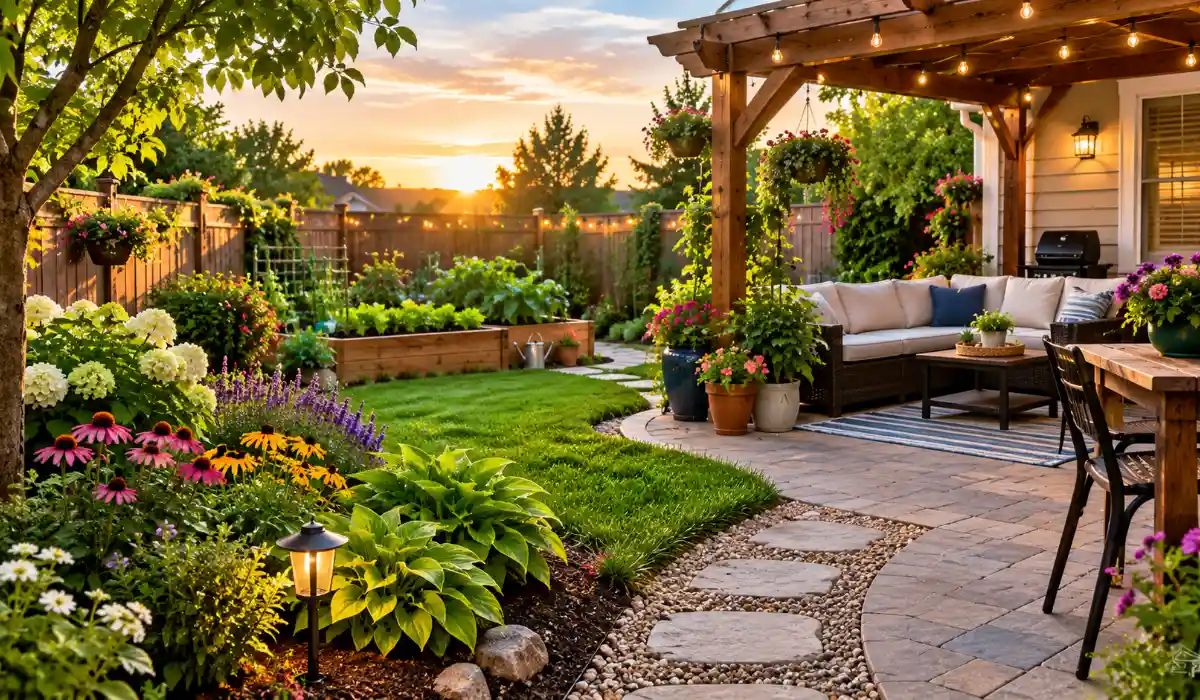
Garden outdoor ideas can help you turn an ordinary yard into a welcoming space for flowers, greenery, outdoor dining, relaxation, or growing fresh vegetables. Whether you have a small patio, a narrow side yard, or a spacious backyard, the right combination of plants, pathways, containers, and seating can make your outdoor area more attractive and useful.
The best design depends on your available space, sunlight, climate, budget, and how much time you want to spend on maintenance. You do not need to redesign the entire yard at once. A few well-planned changes, such as adding a raised garden bed, creating a flower border, or arranging plants around a seating area, can make a noticeable difference.
15 Garden Outdoor Ideas for Different Spaces
The following Garden outdoor ideas offer practical ways to improve outdoor spaces in American homes, from compact urban yards to larger suburban gardens.
1. Create Colorful Flower Beds
Flower beds bring color, texture, and seasonal interest to a yard. They can follow a fence, frame a walkway, surround a tree, or define the edge of a lawn.
For a balanced arrangement, combine plants with different heights and growth habits. Place taller varieties toward the back of a border or near a fence, medium-height flowers in the middle, and shorter plants near the front.
Consider these options when planning a flower bed:
- Mix flowering plants with foliage plants for variety.
- Choose plants suited to your region and the amount of sunlight available.
- Leave enough room for mature plants to spread.
- Use mulch where appropriate to help manage weeds and moisture.
- Include plants with different flowering periods for changing seasonal color.
Before buying plants, check their mature sizes and growing requirements. A bed that looks spacious at planting time can become crowded if plants are placed too closely together.
2. Build a Raised Garden Bed
Raised beds provide a defined area for growing vegetables, herbs, flowers, or a mixture of plants. They can be particularly useful when the existing soil is unsuitable or when you want a more organized garden layout. Their suitability still depends on drainage, growing medium, and the plants you intend to grow. University of Maryland Extension+1
You can build a simple rectangular bed or arrange several beds in a pattern with walking paths between them.
Useful raised-bed design choices include:
- Wooden frames for a natural appearance.
- Metal or composite frames for different visual styles.
- Wide paths that make watering and harvesting easier.
- Trellises for climbing crops such as beans or cucumbers.
- Drip irrigation or soaker hoses where appropriate.
Plan the bed width so you can reach the plants without regularly stepping into the growing area. Check the soil and the safety of any imported growing material, particularly if you plan to grow edible crops.
3. Design a Small Patio Garden
A patio can become a garden even when there is little or no open soil. Containers, vertical planters, hanging baskets, and compact furniture let you introduce greenery without taking up the entire floor area.
Choose a few containers in complementary colors instead of filling every available corner. Place larger pots along walls or at the edges of the patio, then use smaller planters on steps, shelves, or tables.
For a functional layout:
- Keep the main walking route clear.
- Group plants with similar light and watering needs.
- Use containers with suitable drainage.
- Choose furniture that fits the space without blocking access.
- Position taller planters where they will not unnecessarily shade smaller plants.
Container gardens are flexible because pots can be rearranged as plants grow or seasonal conditions change.
4. Add a Garden Pathway
A pathway connects different parts of the garden and helps make the layout feel intentional. It can lead from a patio to a vegetable bed, connect a gate to the house, or guide visitors toward a quiet seating area.
Common pathway materials include gravel, stepping stones, brick, pavers, and natural stone. Choose a surface that suits the garden’s style and is practical for regular use.
When planning a path, consider drainage, slope, footing, and the needs of anyone who will use it. A route that is easy to walk on in dry weather should also be considered during rain. Keep path edges clear enough to prevent plants from spreading into the walking area.
5. Create a Vertical Garden
Vertical gardening makes use of walls, fences, trellises, and freestanding structures. It is useful for narrow yards, balconies, patios, and other places where ground space is limited. Extension guidance also identifies vertical planters and hanging baskets as options for growing in restricted spaces. West Virginia University
You could use:
- Wall-mounted planters for herbs and compact flowers.
- Trellises for climbing vines.
- Hanging baskets for suitable trailing plants.
- Tiered shelves for small pots.
- Freestanding vertical frames for a flexible display.
Before attaching a structure to a wall or fence, check that it can support the weight of the planters, growing medium, and water. Plants growing vertically may dry out faster than those in larger ground beds, so make watering part of your routine.
6. Add a Garden Seating Area
A bench or small seating area gives the garden a clear destination. It can be placed under a tree, beside a flower border, near a patio, or in a quiet corner away from busy household areas.
For a simple setup, start with weather-appropriate seating and add a small table or a few containers. A pergola or shade structure may make the space more comfortable, depending on the local climate and available room.
Think about the view from the seat. Facing a flower bed, a small water feature, or a planted border can make the area feel connected to the rest of the garden. Leave sufficient room to move around the furniture and maintain nearby plants.
7. Plant Along Fences and Property Borders
Fences and property boundaries can become attractive planting areas instead of plain edges. A border of shrubs, ornamental grasses, and flowering plants adds depth and softens hard surfaces.
Choose plants according to the available width, mature height, sunlight, and local growing conditions. Avoid placing large shrubs where they will obstruct gates, paths, utility access, or neighboring spaces.
A narrow border can still look effective with a repeated group of plants and a clear edge. Repetition helps connect different sections of the yard without requiring identical planting everywhere.
8. Grow a Kitchen Garden
A kitchen garden grows edible plants such as vegetables, herbs, and sometimes fruit. It can be arranged in raised beds, containers, or an in-ground plot, depending on the space and soil conditions.
Start with foods your household regularly uses. Basil, parsley, lettuce, tomatoes, peppers, and other suitable crops can be good options when their growing requirements match your local climate.
Before planting, consider sunlight, access to water, soil quality, and the space needed by mature plants. Many edible crops require substantial direct sunlight, but the exact amount varies by species. Follow the recommendations for each crop rather than assuming every plant needs the same conditions.
A small, well-maintained kitchen garden is often easier to manage than a large plot planted with more crops than you can care for.
9. Use Containers to Add Color
Containers are useful for adding color to entrances, patios, decks, steps, and otherwise empty corners. They also allow you to change a display without rebuilding a flower bed.
For a visually interesting arrangement, combine plants with different heights, leaf shapes, and growth habits. Use one larger container as a focal point, then repeat a smaller number of pots nearby.
Remember that container plants depend on the growing medium inside the pot for water and nutrients. Check moisture regularly, provide drainage, and choose containers large enough for the plants you intend to grow.
10. Design a Shade Garden
Shady spaces beneath trees, beside buildings, or along north-facing areas can support attractive gardens when plants are selected for the conditions.
Ferns, hostas, and other shade-tolerant plants may be suitable, depending on local climate, soil, and the level of shade. Some plants tolerate light shade but perform poorly in dense shade, so check each plant’s requirements before purchasing it.
A shade garden can also use leaf textures, contrasting foliage colors, stones, and a winding path to create visual interest without depending entirely on flowers.
When planting beneath established trees, take care not to damage major roots or pile soil against tree trunks. Work around existing roots and choose plants that can tolerate the site’s conditions.
11. Install a Trellis for Climbing Plants
A trellis adds height and helps direct climbing plants into a defined space. It can be placed along a fence, near a patio, or behind a garden bed to create a vertical focal point.
Select a trellis that suits the mature size and climbing habit of the plant. Some vines attach themselves to supports, while others need to be tied or guided through a structure.
Secure the trellis properly and consider its exposure to wind. Avoid planting aggressive vines where they could damage nearby structures or overwhelm other plants. Regular pruning and training help keep the display organized.
12. Create a Rock Garden
A rock garden combines stones, gravel, and plants chosen for the conditions of the site. It can work well on a slope, in a sunny corner, or in an area where a conventional lawn or flower bed is difficult to maintain.
Use stones of different sizes, but arrange them in a way that looks natural and provides stable footing. Select plants based on local conditions rather than assuming all plants used in rock gardens tolerate drought.
A well-planned rock garden can reduce the area that needs mowing, but it still requires attention to weeds, drainage, and plant care.
13. Add a Water Feature
A fountain, small pond, or recirculating water feature can become the focal point of an outdoor garden. Water features can suit formal layouts, naturalistic planting schemes, and compact courtyards.
Before installation, think about the power supply if a pump is required, access for cleaning, splash or runoff, and child safety. A pond also requires suitable planning for water quality and maintenance.
If a permanent installation is not practical, a container water feature may offer a smaller alternative. Choose a design that fits the scale of the garden and can be maintained consistently.
14. Use Garden Lighting
Outdoor lighting can make pathways easier to see after dark and highlight selected garden features. It can also help define a patio or seating area.
Possible options include path lights, suitable string lights, wall-mounted fixtures, and spotlights directed toward a tree or architectural feature.
Use lighting selectively rather than illuminating every corner. Check that fixtures are rated for their intended outdoor conditions, and follow manufacturer instructions for electrical installation. Position lights to avoid unnecessary glare into neighboring properties or directly into people’s eyes.
15. Create a Wildlife-Friendly Garden
A wildlife-friendly garden can provide food and shelter for pollinators and other local wildlife. Plant choices should reflect the species and environmental conditions of your region.
Useful approaches include:
- Growing native plants appropriate to your area.
- Choosing a variety of plants that flower at different times.
- Providing suitable shelter and nesting opportunities.
- Reducing unnecessary pesticide use.
- Keeping water sources clean and safe where appropriate.
- Leaving some natural plant material when it is suitable for the garden.
Avoid treating all wildlife as equally beneficial in every situation. Research local plants and species, and select features that support the wildlife you want to attract without creating unwanted maintenance or safety issues.
How to Plan Garden Outdoor Ideas for Your Home
Before choosing materials or plants, take time to understand your outdoor space. A simple plan can help you avoid overcrowding, reduce unnecessary purchases, and make the garden easier to maintain.
Assess Sunlight, Soil, and Drainage
Observe how sunlight moves across the yard during the day. Some areas may receive full sun, while others stay shaded by buildings, fences, or trees.
Check whether water drains away after rain or collects in low spots. Soil conditions also matter, especially when you plan to grow vegetables or flowering plants. A soil test can help identify pH and nutrient concerns when amendments are needed.
Choose a Layout That Fits Your Needs
Think about how you want to use the garden. A family yard may need open space for activities, while a small courtyard may work better with containers and a compact seating area.
You can divide the yard into simple zones:
- Growing area: Flower beds, vegetable plots, herbs, or containers.
- Relaxation area: A bench, patio furniture, or a quiet garden corner.
- Walking area: Paths that connect entrances, planting beds, and seating.
- Decorative area: A focal plant, trellis, sculpture, or water feature.
These zones do not need physical barriers. Changes in planting, paving, or furniture placement can make each area feel distinct.
Select Plants for Your Region
The United States includes a wide range of climates, from cold northern winters to hot, humid summers and dry southwestern conditions. A plant that thrives in one state may struggle in another.
Use your local growing conditions to guide plant selection. Consider the USDA Plant Hardiness Zone for perennial plants, while also checking sunlight, soil, moisture, and heat tolerance. Hardiness zones describe average annual extreme minimum winter temperatures, so they are useful but do not replace other growing requirements. Proven Winners also emphasizes using regional information when selecting plants for different climates. Proven Winners+1
Set a Realistic Budget
You can build a pleasing garden gradually. Start with the improvements that matter most, then add decorative details as time and budget allow.
| Project | What to consider | Ways to manage cost |
|---|---|---|
| Flower border | Plant spacing and mature size | Begin with a small section |
| Raised bed | Frame material, soil, and water access | Use a simple design |
| Patio containers | Pot size, drainage, and growing medium | Reuse suitable containers |
| Garden path | Surface, drainage, and preparation | Create a short path first |
| Seating corner | Furniture durability and shade | Start with a bench |
| Garden lighting | Fixture rating and installation | Light only key areas |
Prices vary by location, materials, and project size, so compare local options before purchasing supplies.
Common Garden Design Mistakes to Avoid
Even attractive plants and accessories can look disorganized when they are not planned around the space.
Avoid these common mistakes:
- Planting too closely: Leave room for mature growth to reduce crowding and unnecessary pruning.
- Ignoring sunlight: Match plants to the light conditions they actually receive.
- Choosing plants only for appearance: Consider water needs, local climate, maintenance, and mature size.
- Making paths too narrow: Allow comfortable movement between beds and seating areas.
- Overdecorating: Too many unrelated ornaments can make a small yard feel cluttered.
- Ignoring drainage: Address areas where water collects before adding beds or hard surfaces.
- Underestimating maintenance: A design should fit the time you can realistically spend watering, pruning, and weeding.
A good garden does not have to be elaborate. A clear layout, suitable plants, and a few well-chosen features can be more effective than a large number of decorative additions.
Final Thoughts
The most successful garden outdoor ideas are those that make your yard attractive, comfortable, and practical for everyday use. Flower beds, raised gardens, container displays, pathways, vertical planters, seating areas, and wildlife-friendly planting can all contribute to a more inviting outdoor space.
Start with your available space, local growing conditions, and main priorities. Choose a manageable project, observe how it works through the season, and make adjustments as your garden develops. A thoughtful design can grow over time without requiring a complete makeover at once.
Frequently Asked Questions
What are the best garden outdoor ideas for a small yard?
For a small yard, consider vertical planters, compact flower beds, container gardens, a narrow pathway, and a small seating area. These garden outdoor ideas help use available space without filling every corner with furniture or plants.
How can I improve my garden without spending much money?
Start by rearranging existing pots, dividing suitable plants, refreshing a garden border, or creating a simple path. Reusing materials and completing one project at a time can help control costs.
Which plants are best for an outdoor garden?
The best plants depend on your region, sunlight, soil, drainage, and watering routine. Native plants and varieties adapted to local conditions can be useful starting points, but check each plant’s individual requirements before planting.
How can I make my outdoor garden easier to maintain?
Choose plants suited to your growing conditions, group plants with similar watering needs, use mulch where appropriate, and keep paths accessible. Simple layouts generally make routine maintenance easier.
What are some garden outdoor ideas for a backyard?
A backyard can include raised vegetable beds, colorful flower borders, a patio seating area, a trellis, a garden pathway, outdoor lighting, or a small water feature. Select features according to your available space and how you want to use the yard.
How do I choose garden outdoor ideas for my climate?
Identify your local growing conditions and select plants that tolerate the area’s typical temperatures, sunlight, and moisture. In addition to hardiness zones, consider summer heat, rainfall, soil type, and exposure to wind.
Can I create an outdoor garden without a lawn?
Yes. You can use flower beds, gravel areas, raised beds, containers, ground-cover plants, and paths to create a garden without a traditional lawn. Make sure the design suits your drainage conditions and intended use of the space.