
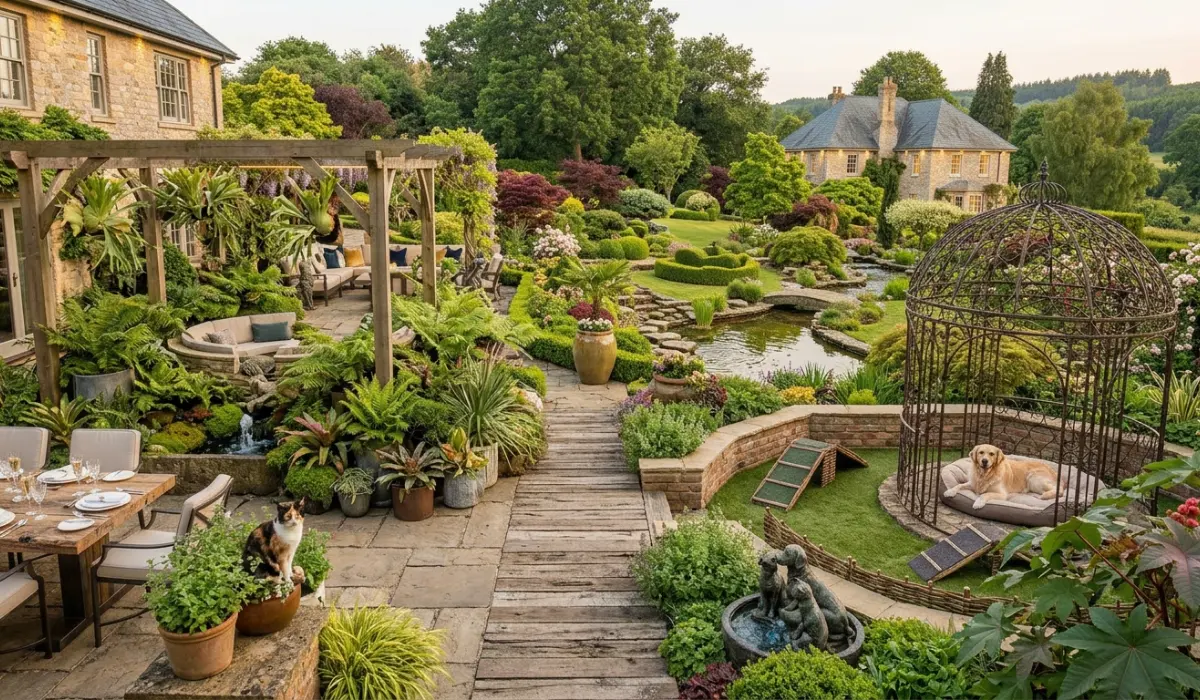
A home garden should be more than a collection of plants placed around the property. When it is planned properly, it can become a comfortable extension of the home, improve the appearance of outdoor areas, provide a place to relax, and make everyday life more enjoyable. You do not need a huge backyard or an expensive landscaping project to achieve this. Even a patio, balcony, narrow side yard, or small entrance can become an attractive outdoor space with the right approach.
The most useful decoradhouse garden tips by decoratoradvice focus on making decisions according to the space rather than following every garden trend. Plant selection, sunlight, soil, drainage, furniture, pathways, lighting, privacy, and maintenance should work together.
A successful garden is not necessarily the one with the most decorations. It is the one that looks good, functions well, and remains manageable after the initial excitement of designing it has passed.
Understand Your Garden Before You Start
One of the easiest ways to waste money on a garden is to purchase plants and decorations before understanding the space. Before making changes, spend some time observing your outdoor area.
Notice where sunlight falls during the morning and afternoon. Look at which areas stay shaded and where rainwater collects. Pay attention to wind exposure, existing trees, walls, gates, windows, outdoor taps, and the routes people regularly use.
You should also consider what you want the garden to accomplish.
Perhaps you want:
- A quiet place to relax
- A family seating area
- More privacy
- A space for flowers
- A small vegetable garden
- An attractive entrance
- A children’s activity area
- A low-maintenance landscape
Understanding the purpose first makes every later decision easier.
Create a Practical Garden Layout
A good layout gives the garden structure without making it feel crowded. Start by identifying the areas that need to remain open for walking and everyday activities.
A simple garden may contain a planting zone along the boundary, a seating area near the house, a pathway through the garden, and a focal point toward the end of the view.
Avoid placing large furniture in the natural walking route. Plants should also have enough room to grow without eventually covering paths or blocking doors.
Think about the garden from different viewpoints. What will you see when you enter through the gate? What will the garden look like from a living-room window? Which area naturally attracts attention?
These questions can help you create a layout that feels intentional rather than randomly arranged.
Choose Plants According to Your Environment
Beautiful plants are not automatically suitable for every garden. The best choices depend on local climate, sunlight, soil, drainage, available water, and mature plant size.
Before purchasing a plant, check:
- How much sunlight it requires
- How large it becomes
- Whether it prefers dry or moist soil
- Whether it tolerates local temperatures
- How frequently it needs watering
- Whether it requires regular pruning
- Whether its roots may become problematic
- Whether it is suitable for containers or open ground
Choosing suitable plants from the beginning can reduce maintenance and improve long-term garden health.
Think About Mature Plant Size
A common beginner mistake is spacing plants according to their current size.
A small shrub may look perfectly positioned when purchased, but its mature width could eventually cause overcrowding. Large plants can also block windows, pathways, views, or smaller plants.
Always check the expected mature height and width before planting permanently.
Use Plant Layers for a More Natural Design
Plant layering can add depth and make a garden appear fuller without requiring excessive decoration.
Tall plants or trees can form the background. Medium-height shrubs can occupy the middle layer, while flowers, herbs, groundcovers, or smaller ornamental plants can fill the lower level.
This arrangement creates visual variety and prevents every plant from appearing at the same height.
However, avoid treating layering as a strict rule that works everywhere. Consider sunlight, mature size, views, and maintenance access before deciding where each plant belongs.
Design a Garden Around Your Home
A garden should feel connected to the house instead of looking like an unrelated space.
For a modern home, simple containers, clean pathways, restrained planting combinations, and straightforward furniture may create a stronger connection.
A traditional property might work better with natural stone, softer planting arrangements, timber features, or more informal pathways.
The objective is not to make the garden identical to the interior. Repeating one or two materials, colors, or textures can be enough to create visual continuity.
For example, a material used around an entrance could appear again in garden edging or a seating area.
Create Functional Garden Zones
Large outdoor areas can become much easier to use when divided into functional zones.
A garden might include a:
Relaxation Zone
Place comfortable seating somewhere with an attractive view and, where appropriate, shade.
Dining Zone
If outdoor meals are important, position a table close enough to the house for convenient access.
Gardening Zone
Keep herbs, vegetables, gardening tools, and water access together where possible.
Privacy Zone
Use suitable trees, shrubs, trellises, or screens to reduce unwanted views.
Open Activity Zone
Families may need an unobstructed area for movement, games, or other activities.
The goal is not to divide every garden into separate rooms. Instead, give important areas a clear purpose.
Make Small Gardens Feel More Spacious
A small garden can still have a strong visual impact. The biggest mistake is attempting to fit too many features into a limited area.
Use furniture that matches the scale of the space. Leave enough open floor area for movement and use walls, fences, and vertical structures when additional planting is needed.
Vertical gardening can include:
- Wall-mounted planters
- Hanging containers
- Trellises
- Climbing plants
- Narrow plant shelves
- Vertical herb gardens
Before installing heavy planters, make sure the supporting wall or structure can safely carry the load.
Mirrors can also be used carefully in some garden designs to reflect light or greenery, but outdoor mirrors should be positioned safely and maintained appropriately.
Use Containers Strategically
Containers are useful when direct planting is difficult or when you want flexibility.
They work particularly well on:
- Balconies
- Patios
- Entrances
- Terraces
- Small yards
- Rental properties
Choose containers according to the mature size of the plant. Large plants generally require more root space than small herbs or seasonal flowers.
Drainage is also essential. Containers should allow excess water to escape so roots do not remain saturated.
Grouping several containers can create a stronger visual effect than scattering individual pots throughout the garden.
Add a Clear Garden Focal Point
A focal point gives the eye somewhere to settle.
Possible focal points include:
- A distinctive tree
- A large planter
- A fountain
- A sculpture
- A seating area
- A colorful planting group
- A pergola
- An attractive gate
The focal point should support the garden rather than overpower it.
If several objects are equally dominant, the garden can lose its visual hierarchy. Use smaller supporting features around the main element instead.
Keep Some Open Space
Empty space is not wasted space.
Open areas allow people to move comfortably, make plants easier to maintain, and prevent the garden from becoming visually overwhelming.
This principle is especially important in small outdoor areas. Filling every corner with pots, furniture, stones, and ornaments may actually make the garden appear smaller.
Allowing some areas to remain visually quiet can make the important features stand out more effectively.
Use Garden Paths for Function and Style
Pathways guide movement through the outdoor space and can also contribute to the overall design.
Common pathway materials include:
- Gravel
- Brick
- Natural stone
- Concrete pavers
- Other suitable outdoor surfaces
Straight paths can produce a formal appearance, while curved paths can create a softer and more natural feeling.
Whatever material you choose, prioritize stability, drainage, maintenance, and comfortable movement.
Do not make paths unnecessarily narrow. Remember that plants will grow and may eventually extend into the walking area.
Improve Garden Lighting After Sunset
A garden should not disappear when the sun goes down. Appropriate lighting can make outdoor areas safer and more enjoyable during the evening.
Use different types of lighting for different purposes.
Path lights can help illuminate walking routes.
Accent lights can highlight trees, walls, sculptures, or attractive planting.
Seating-area lighting can make outdoor conversations more comfortable.
Entrance lighting can improve visibility around gates and doors.
Solar lights can be convenient where installing electrical wiring is difficult, although their performance depends on sunlight, battery capacity, and product quality.
Avoid excessive brightness. Soft, strategically placed lighting often creates a more comfortable atmosphere.
Create a Comfortable Seating Area
A garden becomes much more valuable when people actually want to spend time there.
You do not need a large outdoor furniture set. A bench, two chairs, or a compact table can be enough.
Place seating according to how you plan to use it. You might want a view of flowering plants, a shaded location, or a position close to the house.
Storage benches and multifunctional furniture can be particularly useful in small gardens because they provide more than one purpose.
Improve Privacy Naturally
Privacy is an important part of outdoor comfort, especially when neighboring properties are close.
Instead of immediately building a large solid barrier, consider combining:
- Shrubs
- Small trees
- Trellises
- Climbing plants
- Screens
- Fences
The correct solution depends on the height required, available space, sunlight, local regulations, and maintenance requirements.
Remember that trees and shrubs grow. A privacy planting plan should account for their mature size.
Organize Watering Around Plant Needs
Not every plant should receive the same amount of water.
Group plants with similar moisture requirements together whenever practical. This makes irrigation more efficient and reduces the chance of overwatering drought-tolerant plants while trying to satisfy plants that need more moisture.
Container plants may require more frequent attention because their growing medium can dry out faster than surrounding ground soil.
Drip irrigation or microirrigation can be useful for many beds and containers. Timers can also make watering more consistent, although systems should still be checked regularly for leaks, blockages, or changing seasonal requirements.
Improve Soil Before Adding More Fertilizer
When plants struggle, adding fertilizer is not always the answer.
Poor drainage, unsuitable pH, compacted soil, inadequate sunlight, incorrect watering, root restrictions, and plant selection can all cause problems.
A soil test can provide useful information before applying significant amounts of fertilizer or amendments.
Healthy soil management may involve appropriate organic matter, improved structure, suitable drainage, and selecting plants that match the existing conditions.
The right solution depends on the actual problem.
Use Mulch to Simplify Maintenance
Mulch can make garden care easier by reducing exposed soil and helping conserve moisture. It can also contribute to a cleaner appearance around planting areas.
Suitable mulch options vary depending on the garden, climate, and plants.
Do not pile mulch directly against tree trunks or plant stems. Excessive moisture around the base of plants can create additional problems.
A moderate, properly applied layer is generally more useful than simply adding as much mulch as possible.
Choose Decorations With a Purpose
Garden decorations should support the overall design.
Instead of adding accessories simply because there is empty space, ask what each item contributes.
A trellis may provide plant support and privacy. A storage bench can provide seating and organization. A planter can define a boundary while adding greenery.
Useful decorative features may include:
- Sculptures
- Water features
- Lanterns
- Decorative pots
- Trellises
- Garden benches
- Stone features
- Outdoor screens
A smaller number of well-positioned pieces often creates a more polished result than a large collection of unrelated accessories.
Make the Garden More Wildlife-Friendly
A lively garden can attract birds, butterflies, bees, and other beneficial wildlife.
Suitable flowering plants can provide nectar, while different plant structures can offer shelter. A clean water source may also support wildlife where appropriate.
When selecting plants for this purpose, research species suitable for your region. Avoid introducing invasive plants simply because they are attractive.
A wildlife-friendly garden can add seasonal movement and natural interest without requiring expensive decorations.
Use a Simple Color and Texture Strategy
Color can strongly influence how a garden feels, but there is no universal requirement to use only two or three colors.
A more useful approach is to establish a basic palette and then introduce controlled variations.
For example, green foliage can form the main visual background while flowers or containers provide selected accent colors.
Texture matters too. Broad leaves, fine grasses, rough stone, smooth paving, timber, and metal can create contrast.
Repeating a material or color in several locations can help the garden feel connected.
Create a Low-Maintenance Garden
A low-maintenance garden is not a garden that requires no work. It is a space designed so routine care remains reasonable.
To reduce maintenance:
- Choose plants suited to the local environment.
- Avoid overcrowding.
- Group plants by water needs.
- Use suitable mulch.
- Keep paths accessible.
- Limit unnecessary lawn areas.
- Select durable outdoor materials.
- Provide easy access for pruning and watering.
- Avoid plants that require more care than you can provide.
A simple garden that stays healthy usually looks better than an elaborate design that becomes neglected.
Refresh Your Garden Without Starting Again
You do not need to redesign the entire property whenever the garden begins to feel boring.
Small changes can produce significant results.
Try:
- Rearranging containers
- Repainting suitable outdoor furniture
- Adding seasonal plants
- Cleaning pathways
- Improving lighting
- Pruning overgrown plants
- Creating a new seating corner
- Reorganizing decorative elements
Working gradually also helps you understand which changes genuinely improve how you use the garden.
Seasonal Garden Improvements
A garden changes throughout the year, so the design should be considered as a living system.
Spring
Inspect plants after winter, clean damaged areas, prepare beds, and plan seasonal planting.
Summer
Monitor water needs, heat stress, pests, weeds, and containers that dry quickly.
Autumn
Manage fallen leaves, clean pathways, review plant health, and prepare sensitive plants for colder conditions where necessary.
Winter
Protect appropriate plants, inspect garden structures, clean tools, and plan future improvements.
The exact schedule depends on your location and the plants you grow.
Common Garden Design Mistakes to Avoid
Even a good design can fail when basic planning is ignored.
Overcrowding Plants
Plants need enough space for healthy growth and airflow.
Ignoring Drainage
Repeatedly wet soil can create serious root problems.
Choosing Plants Only for Appearance
A plant must be suitable for its growing conditions.
Using Too Many Decorations
Excessive accessories can make a garden feel cluttered.
Blocking Maintenance Access
Every important planting area should be reachable for watering, pruning, cleaning, and inspection.
Installing Features Before Solving Basic Problems
Fix drainage, unsafe paths, irrigation problems, and major soil issues before investing heavily in decorative improvements.
A Practical Garden Planning Checklist
Before starting your next garden project, ask yourself:
- What is the main purpose of this space?
- How much sunlight does it receive?
- Where does water collect?
- What plants already grow successfully here?
- What will new plants look like at maturity?
- How much maintenance can I realistically provide?
- Where will people walk?
- Where will furniture go?
- What should be the focal point?
- Does the design connect with the house?
- Can the garden be watered efficiently?
- Will I still enjoy maintaining this design next year?
These questions can prevent many common mistakes before they become expensive problems.
Frequently Asked Questions
What are the best decoradhouse garden tips by decoratoradvice for beginners?
Start by observing your garden, defining its purpose, checking sunlight and drainage, choosing suitable plants, and creating a simple layout. Add furniture, lighting, and decorations only after the basic structure works.
How can I make a small garden look attractive?
Use appropriately sized furniture, vertical planting, containers, clear pathways, one strong focal point, and intentional open space. Avoid filling every available corner.
What should I consider before buying garden plants?
Check sunlight, climate, soil, drainage, mature size, water requirements, growth rate, and maintenance needs. The most attractive plant is not always the most suitable plant.
How can I make my garden look more expensive?
Focus on consistency rather than price. Healthy plants, clean paths, coordinated materials, thoughtful lighting, good spacing, and limited clutter can create a polished appearance.
How can I reduce garden maintenance?
Choose plants suited to your conditions, group plants by water requirements, use suitable mulch, avoid overcrowding, and design pathways and planting areas for easy access.
What is the best way to decorate a small backyard?
Start with the layout. Use compact furniture, vertical greenery, containers, subtle lighting, and multifunctional features. Keep the number of decorative items under control.
How do I create privacy in my garden?
Depending on the space, use suitable shrubs, trees, trellises, climbing plants, screens, or fencing. Always consider mature plant size and maintenance before planting.
Does garden lighting need to be expensive?
No. Simple solar or low-voltage fixtures can provide useful lighting. The important factor is placement and purpose rather than using a large number of expensive lights.
How often should I redesign my garden?
There is no fixed schedule. A good garden can evolve gradually as plants mature and your needs change. Small seasonal adjustments may be more useful than complete redesigns.
Can a garden be beautiful and low-maintenance?
Yes. Choose plants suited to the environment, simplify the layout, group plants according to their needs, use appropriate mulch, and avoid features that require more maintenance than you can realistically provide.
Final Thoughts
A beautiful home garden is created through thoughtful decisions rather than simply adding more plants and decorations. The strongest approach begins with understanding the space, defining its purpose, and designing around real conditions.
The most useful decoradhouse garden tips by decoratoradvice encourage homeowners to consider sunlight, soil, drainage, plant maturity, movement, privacy, seating, lighting, and maintenance before investing in decorative features.
Start with the fundamentals. Create a practical layout, select plants that can genuinely thrive, leave enough open space, and use decorations that provide a purpose. Then improve the garden gradually as you discover how your family actually uses the outdoor area.
Whether your garden is a large backyard or a few containers on a small patio, good planning can turn an ordinary outdoor space into a comfortable, attractive, and personal extension of your home.