
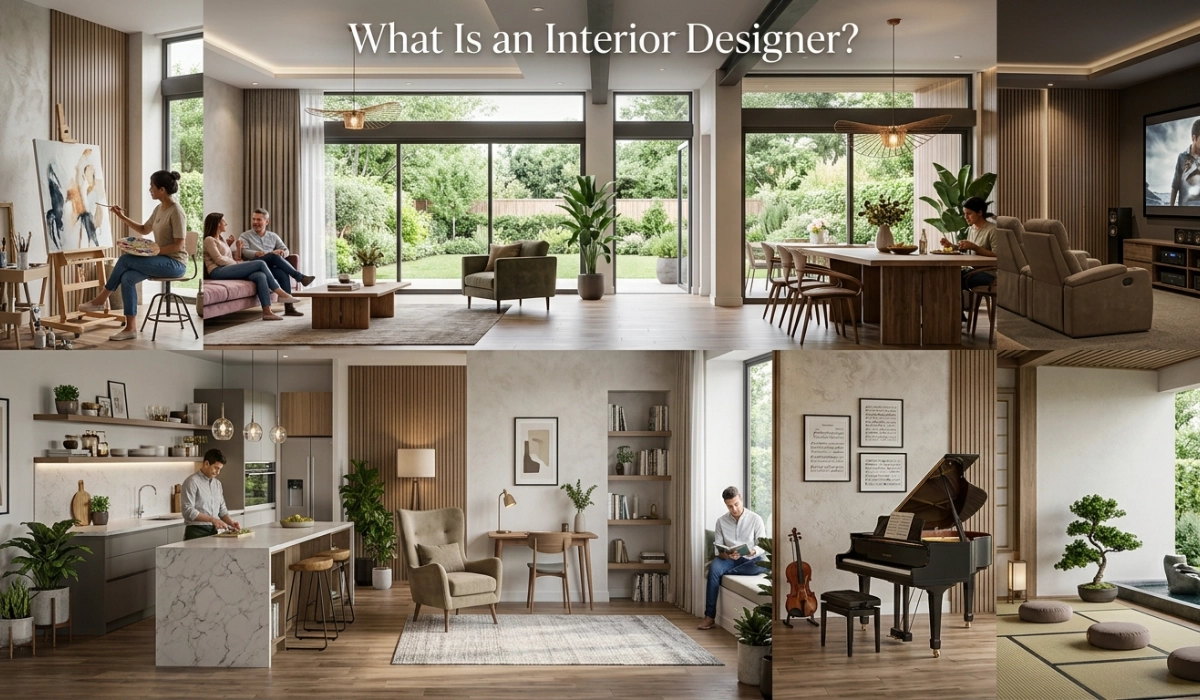
If you have ever entered a room and wondered why everything seems to work together effortlessly, an interior designer may be part of the answer. But what is an interior designer, exactly? The profession involves much more than selecting attractive furniture, paint colors, or decorative accessories.
An interior designer studies how people use spaces and develops practical, aesthetic, and functional solutions around those needs. They consider the dimensions of a room, circulation, lighting, materials, furniture, storage, architectural details, safety requirements, and the overall experience of the people who occupy the space.
Understanding what is an interior designer is important because the profession sits at the intersection of creativity and technical planning. A successful project must look appropriate, but it must also work effectively in everyday life.
What Is an Interior Designer Responsible For?
At its core, what is an interior designer can be answered by looking at the problems these professionals solve. They plan interior environments so that spaces become more functional, comfortable, visually coherent, and appropriate for their intended use.
Their work can involve a single room, an entire residence, a workplace, hospitality environment, retail property, healthcare facility, or another interior setting.
Depending on the project, an interior designer may:
- Analyze the existing space and its limitations
- Discuss the client’s needs and priorities
- Develop layout concepts
- Select materials and finishes
- Plan lighting
- Recommend furniture and fixtures
- Develop color and texture schemes
- Coordinate storage solutions
- Prepare drawings and specifications
- Work with architects and contractors
- Review installation and project progress
- Help maintain consistency throughout the design
The exact responsibilities vary according to the designer’s specialization, location, qualifications, and scope of work.
Interior Design Is More Than Decoration
One of the biggest misconceptions about what is an interior designer service is the idea that the profession is simply another name for decorating.
Decoration primarily focuses on the visual character of an existing space. Interior design can involve a much broader examination of how that space functions.
For example, a decorator might help select curtains, artwork, furniture, and accessories. An interior designer may also analyze circulation, spatial organization, lighting requirements, built-in storage, materials, finishes, and relationships between different areas.
The distinction can vary by region and professional practice, so the titles and legal requirements should always be checked locally.
What Does an Interior Designer Do During a Project?
A design project usually develops through several stages rather than being completed through one creative decision.
1. Understanding the Client
The first stage is discovering what the client actually needs.
A designer may ask how a room is currently used, what problems exist, which activities take place there, what style the client prefers, and what practical limitations must be respected.
Budget, timeline, maintenance expectations, household size, accessibility, and future needs can also influence the direction.
2. Studying the Space
Before recommending changes, the designer evaluates the physical environment.
Measurements, windows, doors, ceiling heights, structural elements, electrical points, plumbing locations, natural light, and circulation patterns can all affect the design.
This stage explains another important part of what is an interior designer: the job requires observation and analysis before creative decisions are made.
3. Developing a Design Concept
Once the requirements are understood, the designer begins developing a concept.
This may include a proposed layout, material direction, color palette, furniture approach, lighting strategy, and visual references.
The concept provides a framework so individual decisions do not become disconnected from one another.
4. Selecting Materials and Furnishings
Materials and furnishings are chosen according to appearance, performance, budget, availability, maintenance, and suitability.
A material that looks beautiful may not be appropriate for a high-traffic environment. Similarly, an attractive chair may be unsuitable if it does not provide adequate comfort.
Good design therefore balances visual appeal with practical performance.
5. Coordinating the Implementation
For larger projects, the designer may communicate with contractors, suppliers, architects, engineers, artisans, and other professionals.
Drawings, schedules, specifications, samples, and product information can help translate the concept into a finished environment.
What Is an Interior Designer?
What Is an Interior Designer and What Do They Actually Do?
What is an interior designer? An interior designer is a professional who plans interior spaces around the people who use them. What is an interior designer in practical terms? The role combines spatial planning, furniture selection, lighting, materials, color, storage, and functionality. When considering what is an interior designer, it is important to understand that the work goes beyond simply decorating a room. A designer studies the available space, identifies practical problems, develops suitable concepts, and helps create an environment that feels organized and purposeful.
Why What Is an Interior Designer Matters for Modern Spaces
Understanding what is an interior designer helps explain why professional planning can make a noticeable difference. An interior designer considers how people move through a room, where natural light enters, how furniture relates to the available space, and how materials will perform over time. What is an interior designer also involves balancing personal taste with practical requirements. Rather than filling a room with fashionable items, the designer aims to create harmony between comfort, appearance, proportion, and everyday use.
What Is an Interior Designer Able to Bring to a Project?
When asking what is an interior designer, another important consideration is the expertise behind the finished space. Designers can bring creative direction, technical understanding, organization, and problem-solving to residential or commercial projects. What is an interior designer without an understanding of the people using the space? The profession is ultimately about creating environments that support real activities and individual needs. By combining thoughtful planning with carefully selected details, an interior designer can turn an ordinary interior into a more functional and distinctive place.
Where Do Interior Designers Work?
Another way to understand what is an interior designer is to look at the wide range of environments where the profession is used.
Residential Design
Residential designers work on houses, apartments, condominiums, vacation properties, and other living environments.
Projects can range from redesigning one bedroom to planning an entire home.
The focus often includes comfort, storage, family routines, entertaining, personal identity, and long-term usability.
Commercial Design
Commercial interiors include offices, retail environments, restaurants, hotels, studios, and other business spaces.
Here, the design must often consider customers, employees, branding, workflow, durability, and operational requirements.
Hospitality Design
Hotels, resorts, restaurants, and similar environments require particularly careful attention to atmosphere and guest experience.
The interior needs to communicate a distinctive identity while also supporting practical operations.
Specialized Environments
Interior designers may also contribute to healthcare, education, institutional, exhibition, and other specialized spaces.
These projects can involve additional technical requirements and collaboration with other professionals.
What Skills Does an Interior Designer Need?
The answer to what is an interior designer also involves understanding the skills behind the profession.
Creativity is important, but it is only one component.
Spatial Awareness
Designers need to understand how objects and people occupy three-dimensional environments.
They must be able to visualize relationships between furniture, walls, openings, circulation routes, and architectural elements.
Communication
A designer must listen carefully and explain ideas clearly. Clients may not always have the vocabulary to describe exactly what they want, so the designer needs to interpret preferences and translate them into practical decisions.
Technical Understanding
Interior projects can involve drawings, dimensions, specifications, lighting, materials, construction details, and building-related considerations.
The level of technical knowledge required depends on the type of work being undertaken.
Material Knowledge
Understanding materials helps designers evaluate durability, maintenance, appearance, texture, cost, and suitability.
Project Organization
Large projects contain many decisions and deadlines. Organization helps coordinate suppliers, contractors, revisions, deliveries, and installations.
Problem-Solving
Unexpected issues are common in real projects. Existing conditions may differ from drawings, products may become unavailable, or budgets may change.
A capable designer needs to respond thoughtfully rather than simply follow an original concept without adjustment.
What Education Does an Interior Designer Need?
People entering the profession can follow different educational routes depending on their country and career goals.
Formal interior design programs may cover subjects such as:
- Design principles
- Drawing and visualization
- Space planning
- Materials and finishes
- Lighting
- Furniture
- Building systems
- Design history
- Computer-aided design
- Professional practice
- Project documentation
Some professionals enter the field through degrees, diplomas, specialized training, apprenticeships, or related design disciplines.
Licensing, registration, or protected professional titles can differ substantially between jurisdictions. Anyone planning to work professionally should therefore research the requirements that apply in their region.
Interior Designer vs. Interior Decorator
The terms are frequently confused.
An interior decorator generally concentrates on the appearance of an existing interior. Their work can include furniture, fabrics, colors, accessories, artwork, and styling.
An interior designer may address those same visual elements while also working with space planning, materials, lighting, built-in features, technical documentation, and other functional considerations.
The difference is not always identical everywhere, however. Professional definitions and legal scopes vary by location.
For someone asking what is an interior designer, this distinction is useful because it demonstrates that interior design can extend well beyond surface decoration.
How Much Does an Interior Designer Cost?
There is no universal price for interior design services.
Fees can depend on the designer’s experience, project size, location, complexity, services provided, and purchasing or project-management responsibilities.
Common pricing structures may include:
- Hourly fees
- Fixed project fees
- Percentage-based arrangements
- Consultation fees
- Design packages
- Combinations of different fee structures
Before hiring someone, clients should understand exactly what the fee covers.
A written agreement can clarify the scope of services, revisions, purchasing responsibilities, payment schedule, estimated timeline, and what happens if the project changes.
Why Hire an Interior Designer?
Hiring a professional can be particularly useful when a project involves complicated spaces, major renovations, multiple suppliers, unusual layouts, or a large number of coordinated decisions.
A designer can provide an outside perspective and help establish priorities.
For example, instead of purchasing individual products one at a time, the designer can develop a broader concept that considers how those pieces will work together.
This can reduce some forms of trial and error and help create a more coherent result.
However, not every project requires professional design services. A homeowner making modest cosmetic changes may prefer to manage the process independently.
How Interior Designers Use Technology
Modern designers increasingly rely on digital tools.
Computer-aided design software can assist with drawings and precise documentation. Three-dimensional modeling can help clients visualize proposed spaces before implementation.
Digital mood boards can bring materials, colors, furniture, and references together in one place.
Technology can improve communication, but it does not replace professional judgment. A visually impressive digital model still needs to correspond with real-world dimensions, materials, budgets, and construction conditions.
The Importance of Sustainability
Sustainability has become an increasingly relevant consideration in interior projects.
Designers can consider durability, responsible material selection, energy-efficient lighting, repairability, adaptability, and reduction of unnecessary waste.
Choosing something that lasts longer can sometimes be more meaningful than choosing a product that is temporarily fashionable.
Reusing existing furniture can also be an effective design strategy. Refinishing, reupholstering, relocating, or modifying existing pieces may preserve useful materials while giving the interior a new character.
Interior Design and Human Experience
Perhaps the most interesting aspect of what is an interior designer is the profession’s connection to human experience.
A space influences how people move, communicate, rest, work, and interact.
A carefully planned entrance can reduce clutter. A comfortable reading area can encourage quiet time. An efficient kitchen can make daily routines easier. A well-organized workplace can support collaboration.
These effects are not always dramatic, but they can accumulate throughout everyday life.
This is why interior design should not be judged only by photographs. A successful space must also function effectively when real people begin using it.
How to Choose an Interior Designer
If you decide to hire a designer, begin by examining their previous work.
Look for projects that demonstrate an understanding of the type of space you are planning rather than choosing someone solely because you like one photograph.
Ask about:
- Previous experience
- Design process
- Scope of services
- Estimated timeline
- Fee structure
- Communication methods
- Project coordination
- Procurement responsibilities
- Revision policies
- Contract terms
It is also useful to communicate your budget honestly from the beginning. A designer can make better decisions when financial boundaries are clearly understood.
Common Misunderstandings About Interior Designers
Several myths continue to surround the profession.
One is that designers simply choose expensive products. In reality, effective design can involve restraint, reuse, practical materials, and careful prioritization.
Another misconception is that designers impose their personal taste on clients. A professional project should generally respond to the client’s requirements rather than simply reproduce the designer’s preferred aesthetic.
There is also a belief that interior design is only relevant to luxury homes. In reality, space planning and functional improvements can be useful in modest apartments, rental properties, offices, shops, and many other environments.
Understanding what is an interior designer therefore requires looking beyond glamorous photographs and recognizing the planning involved behind them.
Frequently Asked Questions
1. What is an interior designer?
An interior designer is a professional who plans and develops interior spaces by considering functionality, spatial organization, materials, lighting, furniture, aesthetics, and the needs of the people using the environment.
2. What is an interior designer’s main job?
Their main job is to create interior environments that work effectively for their intended users while achieving an appropriate visual and spatial character.
3. Is an interior designer the same as a decorator?
Not necessarily. Decorating generally focuses on visual elements, while interior design can include broader spatial, functional, technical, and material considerations.
4. Can an interior designer work on one room?
Yes. A designer can work on anything from a single room to an entire residential or commercial property, depending on the services they offer.
5. Does an interior designer choose furniture?
Furniture selection can be part of the service, but the exact responsibilities depend on the project agreement. Designers may also plan the furniture layout and specify appropriate dimensions and materials.
6. Do interior designers work with architects?
They can. Larger projects frequently require collaboration between interior designers, architects, engineers, contractors, and specialist consultants.
7. Do I need an interior designer for a small home?
Not necessarily. A small project can sometimes be managed independently. Professional assistance becomes more useful when the layout, renovation, technical requirements, or number of decisions becomes difficult to manage alone.
8. How does an interior designer charge?
Pricing varies. Designers may charge hourly, use fixed project fees, offer packages, or use other arrangements depending on the services and market.
9. Can an interior designer make a small room look better?
Yes. Space planning, furniture scale, storage, lighting, color, and circulation can all influence how a small room functions and feels.
10. What is an interior designer ultimately trying to achieve?
The goal is generally to create a space that responds to its users and combines practical performance with an intentional visual and spatial experience. The exact priorities depend on the project.