
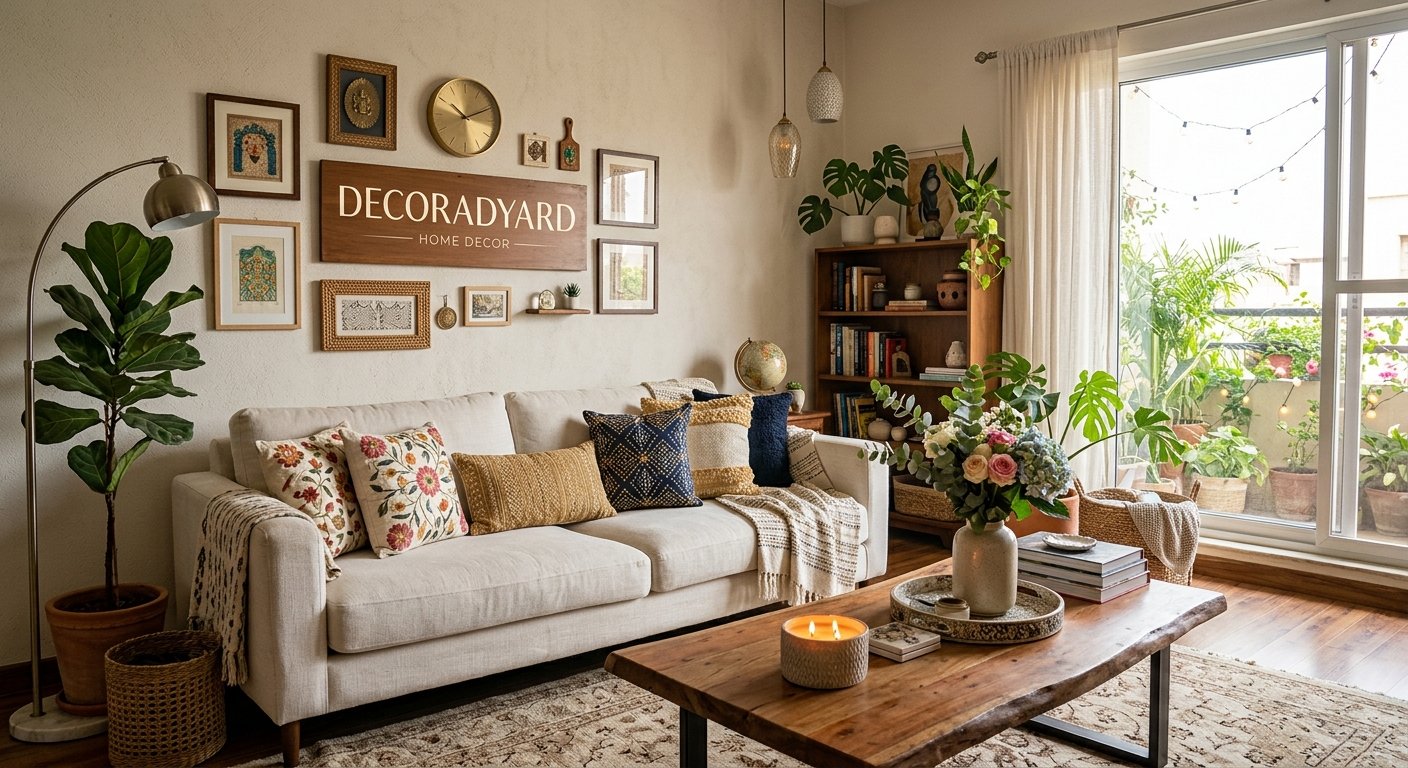
A beautiful home does not depend on expensive furniture, designer accessories, or a complete renovation. The difference usually comes from how well the available space is planned, how materials work together, and whether decoration supports everyday life. Decoradyard takes a practical approach by treating decoration as a combination of aesthetics, function, proportion, lighting, comfort, and personality.
Instead of filling every empty corner with accessories, start by asking what the space needs. A living room may need better circulation, a bedroom may need calmer lighting, while a small patio may need weather-resistant furniture rather than more decoration. This approach creates a home that looks intentional without feeling overcrowded.
What Does Decoradyard Mean in Modern Home Decoration?
Decoradyard can be understood as a practical decorating approach that connects interior styling with outdoor living. It focuses on making rooms, patios, balconies, gardens, and yards visually appealing while keeping them useful and manageable.
The strongest principle is simple: decoration should solve a problem as well as improve appearance. A mirror can brighten a dark wall, a storage bench can remove clutter, and a properly positioned rug can visually define a seating area without adding another piece of furniture.
Why Function Should Come Before Decoration
Before selecting decorative objects, determine how the area will actually be used. A family room that handles television, conversation, children’s activities, and occasional guests needs a different arrangement from a formal sitting room.
Consider these questions:
- What activities happen here every day?
- Where do people naturally walk?
- Which items need to remain accessible?
- What currently feels uncomfortable or inefficient?
- Which existing pieces are worth keeping?
This prevents a common decorating mistake: buying attractive objects that eventually become obstacles.
Measure Your Space Before Buying Anything
One of the most useful improvements over generic decorating advice is to treat measurements as part of the design process. A beautiful sofa is still a poor choice if it blocks a doorway or leaves insufficient circulation space.
Measure wall lengths, ceiling height, door openings, windows, radiators, electrical outlets, and permanent architectural features. Also measure the route from the entrance to the room because a large piece of furniture must physically reach its final position.
Create a Simple Furniture Map
You do not need professional design software. Draw the room on paper or use a basic digital floor plan, then mark major furniture dimensions.
Pay particular attention to:
- Main walking routes
- Door and cabinet clearances
- Window access
- Television viewing position
- Conversation areas
- Storage requirements
- Natural light sources
This small planning step can prevent expensive purchasing mistakes and makes the final arrangement much easier to visualize.
Use Proportion Instead of Matching Everything
Furniture does not need to belong to the same collection. What matters more is proportional balance.
A large sectional may require a substantial coffee table and appropriately scaled lighting. Conversely, a compact apartment can look overwhelmed when oversized furniture is combined with heavy curtains, large artwork, and multiple bulky accessories.
The goal is not perfect symmetry. It is visual equilibrium.
Build a Color Palette That Can Survive Changing Trends
Color is one of the fastest ways to alter a room, but using too many unrelated shades can make the design feel chaotic. A more reliable approach is to create a base palette and introduce stronger colors through elements that are easy to replace.
A useful structure is:
| Design Element | Recommended Role | Examples |
| Base color | Largest visual area | Warm white, beige, soft gray |
| Supporting color | Furniture and textiles | Taupe, muted green, blue |
| Accent color | Smaller focal elements | Terracotta, navy, ochre |
| Natural tone | Adds warmth | Wood, stone, rattan |
Test Paint in Different Lighting
Never judge a paint color from a tiny store card alone. Wall color can appear dramatically different under morning sunlight, afternoon daylight, and artificial illumination.
Paint a sample area and observe it throughout the day. This is particularly important for north-facing rooms, rooms with limited windows, and spaces that rely heavily on artificial lighting.
Create Visual Hierarchy Instead of Decorating Every Surface
A room becomes easier to understand when the eye has a clear starting point. This is called visual hierarchy.
Choose one primary focal point, such as:
- A fireplace
- A large artwork
- A feature wall
- A distinctive bed
- A window with an attractive view
- An architectural feature
Then allow supporting elements to reinforce that focal point rather than competing with it.
The Three-Level Styling Method
A practical styling technique is to combine objects at different heights. For example, a console can contain a low decorative object, a medium-height vase, and artwork positioned above the surface.
This creates depth without requiring dozens of accessories. Leave some negative space between groups so individual pieces remain visible.
Use Lighting as a Design System
Lighting should not be treated as an afterthought. It influences color perception, shadows, atmosphere, and how useful a room feels after sunset.
A strong lighting plan normally combines three functions:
Ambient Lighting
Ambient lighting provides general illumination. Ceiling fixtures, recessed lights, and larger pendant fixtures commonly perform this role.
Task Lighting
Task lighting supports specific activities. Reading lamps, under-cabinet lights, desk lamps, and vanity lighting are examples.
Accent Lighting
Accent lighting draws attention toward artwork, shelves, plants, architectural details, or textured walls.
Combining these layers creates greater depth than depending on one bright ceiling fixture.
Match Light Temperature to the Room
The color temperature of a bulb changes the atmosphere of a space. Warmer illumination tends to feel comfortable in bedrooms and relaxing areas, while neutral illumination can be more suitable for kitchens, offices, and detailed work.
Instead of choosing bulbs solely by brightness, consider both lumens and color temperature. A very bright bulb can still produce an unpleasant environment if its tone does not suit the room.
Make Texture Do More Work
If a room feels flat even though the colors are attractive, texture may be missing. Texture gives the eye something to explore and can make neutral interiors feel considerably richer.
Combine materials rather than simply adding more objects. Wood, linen, wool, ceramic, glass, metal, woven fibers, and stone can create contrast while maintaining a restrained palette.
Mix Soft and Hard Materials
A smooth table beside a woven chair creates a different visual experience from a room filled entirely with polished surfaces. Similarly, a soft rug can soften the appearance of hard flooring.
The key is controlled contrast. Too many competing textures can make a room look busy, while too few can make it feel sterile.
Decoradyard Ideas for a More Functional Living Room
The living room often performs several jobs simultaneously, so its layout should be planned around movement and interaction rather than decoration alone.
Begin by identifying the room’s strongest feature. Position the main seating arrangement around it, then add secondary seating where space permits.
A rug can visually anchor the arrangement, but its size matters. A rug that is too small may make furniture appear disconnected, while an appropriately scaled rug can unite the entire seating zone.
Keep Technology From Dominating the Room
Televisions, speakers, cables, and charging equipment can quickly become visual distractions. Where possible, route cables neatly, use concealed storage, and avoid positioning every decorative element around the television.
Technology should support the room rather than become its only focal point.
Bedroom Decoration Should Prioritize Calm
Bedrooms benefit from visual simplicity because they are primarily spaces for rest. Instead of covering every wall with decorative objects, concentrate on a few elements that establish a calm atmosphere.
Soft bedding, controlled lighting, restrained artwork, and practical bedside storage can make the room feel finished without excessive decoration.
Create a Bedside Lighting Strategy
A bedside lamp should provide enough illumination for reading without flooding the entire room with light. Wall-mounted fixtures can be useful when table space is limited, while dimmable lamps offer greater control.
Keep frequently used objects within easy reach. Good bedroom design is not only about appearance; it reduces small frustrations in everyday routines.
Smart Decoration for Small Rooms
Small rooms require editing rather than simply smaller versions of large-room decoration.
Choose furniture that performs multiple functions where possible. A storage ottoman, narrow console, wall-mounted shelf, or bed with integrated storage can provide useful capacity without consuming unnecessary floor area.
Use Vertical Space Carefully
When floor space is limited, walls can provide valuable storage and display opportunities. Tall shelving, vertical artwork, and appropriately positioned mirrors can draw the eye upward.
However, covering every wall with shelves can create visual weight. Keep frequently accessed storage practical and reserve some areas for breathing space.
How to Decorate Open-Plan Spaces Without Losing Cohesion
Open-plan rooms can become difficult to decorate because several functions occupy one large visual field. The solution is not to make every zone identical.
Instead, create subtle connections through repeated materials, colors, or finishes. A wood tone used in the dining area can reappear in the living room, while a shared accent color can connect separate seating zones.
Define Zones With Furniture and Rugs
A sofa can separate a living area from a dining zone without creating a physical wall. Rugs, pendant lights, consoles, and changes in furniture orientation can also establish boundaries.
The important point is to maintain circulation between the zones. A visually attractive layout becomes frustrating if people must constantly walk around furniture.
Decoradyard Approach to Walls and Empty Corners
Empty walls are not automatically problems. Some negative space is necessary to prevent visual overload.
Instead of filling every blank surface, identify which walls genuinely benefit from attention.
Good possibilities include:
- One substantial artwork
- A curated photo arrangement
- A floating shelf
- A mirror
- A textured wall treatment
- A compact plant display
Turn Awkward Corners Into Useful Areas
An unused corner can become a reading space, plant area, compact workstation, or storage zone. The best solution depends on the dimensions and natural light available.
Before adding anything, check whether the corner is genuinely unused. Some spaces need to remain clear because they form part of a natural traffic route.
Bring Outdoor Areas Into the Overall Design
Modern outdoor spaces can function as extensions of interior living areas. Patios, balconies, courtyards, and yards can provide places for dining, relaxing, gardening, or entertaining.
The transition feels stronger when outdoor materials complement the interior rather than appearing completely unrelated.
Design Outdoor Zones Around Actual Use
A yard does not need to contain every possible feature. Decide whether the priority is dining, relaxation, gardening, children’s activities, entertaining, or a combination.
For example, a small patio may benefit more from a compact dining set and vertical planting than from several large decorative objects.
Consider Weather and Maintenance
Outdoor decoration has to withstand conditions that indoor furniture does not. Sun exposure, rain, humidity, wind, temperature changes, and drainage should influence material selection.
Before buying outdoor furniture or decorative features, consider:
- UV exposure
- Water resistance
- Corrosion risk
- Cleaning requirements
- Seasonal storage
- Wind stability
This is an area where attractive appearance alone is not enough.
Make Your Garden Part of the Design
Plant selection should be based on growing conditions rather than appearance alone. Sunlight, soil, drainage, mature size, and local climate can all affect long-term results.
Plants that look perfect at the nursery may eventually become too large for their location. Understanding mature dimensions helps avoid overcrowding and reduces future maintenance. Garden Decoradyard is very important for home.
Use Plants to Create Structure
Trees and larger shrubs can establish the framework of an outdoor space, while smaller plants provide seasonal color and texture.
Think about the garden in layers:
- Structural plants
- Medium-height planting
- Ground-level plants
- Containers or seasonal accents
This produces depth without requiring excessive decoration.
Choose Sustainable Decoration Where Practical
Good decoration does not have to mean constant replacement. Durable materials, secondhand furniture, refurbished pieces, and timeless accessories can reduce waste while keeping a home visually interesting.
Before replacing an item, ask whether it can be repaired, refinished, repositioned, or updated.
A wooden table may need only refinishing. Cabinet hardware can sometimes completely change the appearance of storage. Cushion covers can update a seating arrangement without replacing the furniture itself.
Decoradyard Ideas for Decorating on a Budget
A limited budget can actually improve design decisions because it encourages prioritization.
Rather than purchasing twenty inexpensive accessories, identify the three changes that would make the largest difference.
A practical order is:
- Fix functional problems.
- Improve lighting.
- Establish the color palette.
- Rearrange existing furniture.
- Add textiles and texture.
- Introduce selected decorative pieces.
This sequence prevents money from being spent on accessories before fundamental problems are solved.
Common Decoration Mistakes to Avoid
Even expensive interiors can look poorly planned when basic design principles are ignored.
Buying Furniture Before Measuring
This is one of the easiest mistakes to prevent. Always measure the room, furniture, doorways, and access route before purchasing.
Using Too Many Small Accessories
Numerous small objects can create visual noise. Fewer, larger, better-positioned pieces often create a stronger result.
Ignoring Scale
A tiny artwork above a large sofa can look disconnected, while oversized furniture can overwhelm a compact room.
Relying on One Light Source
A single ceiling light often creates harsh shadows and leaves parts of the room visually flat. Layered illumination provides much greater control.
Copying a Trend Exactly
A room should reflect the people who use it. Trends can provide inspiration, but copying an entire showroom-style arrangement may not suit your home’s architecture, budget, or daily routines.
A Practical 7-Step Decoration Workflow
If you are unsure where to begin, use a simple sequence rather than changing everything simultaneously.
Step 1: Analyze the Space
Measure the room and identify natural light, architectural features, traffic routes, and problem areas.
Step 2: Define the Purpose
Decide what you need the room to accomplish. Function determines many later design choices.
Step 3: Select the Palette
Choose a base color, supporting shades, and one or two accents.
Step 4: Arrange Major Furniture
Create the main layout before adding accessories. Check movement and proportions.
Step 5: Plan Lighting
Combine ambient, task, and accent sources according to the activities performed in the room.
Step 6: Add Texture and Personality
Introduce textiles, artwork, plants, ceramics, wood, or other materials that reflect your taste.
Step 7: Edit the Finished Room
Live with the arrangement for a few days. Remove anything that blocks movement, feels unnecessary, or does not contribute to the room.
Pros and Cons of the Decoradyard Approach
| Pros | Cons |
| Encourages functional decoration | Requires planning before shopping |
| Works with different budgets | May take longer than impulse decorating |
| Reduces unnecessary clutter | Requires accurate measurements |
| Can combine indoor and outdoor design | Durable materials may cost more initially |
| Supports personal style | Some experimentation may be necessary |
Frequently Asked Questions
Is Decoradyard only for outdoor decoration?
No. Although the name can suggest yard or outdoor design, the broader approach can be applied to interior rooms, patios, balconies, gardens, and other residential spaces. The central idea is practical decoration that combines appearance with usability.
How can I decorate my home without spending much money?
Start with rearranging furniture, improving lighting, decluttering, changing textiles, and repurposing existing items. Spend money first on changes that solve functional problems rather than buying decorative objects simply to fill empty space.
What should I choose first: furniture or paint?
There is no universal rule, but existing or planned large furniture can influence the most appropriate wall colors. If you already own major pieces, use their finishes and colors as part of your palette before committing to paint.
How do I make a small room look more spacious?
Keep circulation clear, select appropriately scaled furniture, use vertical elements, control visual clutter, and make good use of natural and artificial light. A carefully positioned mirror can also increase perceived depth, but it should be placed where it reflects something useful or attractive.
How can I make my outdoor space feel like part of my home?
Repeat selected interior elements outdoors, such as a complementary color, material, pattern, or style. Then create comfortable outdoor zones with suitable seating, lighting, planting, and weather-resistant finishes.
Final Thoughts
Effective decoration is less about buying more and more about making better decisions. Decoradyard provides a useful framework for thinking about a home as a connected environment where layout, lighting, color, texture, materials, storage, and outdoor spaces all support the way people actually live.
Start with measurements and purpose, solve functional problems first, then build visual character through carefully selected colors, furniture, lighting, textures, plants, and accessories. When every element has a reason to be there, even a modest home can feel polished, comfortable, and genuinely personal.
For additional inspiration, you can explore decoradyard and use the ideas that genuinely fit your home’s architecture, climate, lifestyle, and budget.