
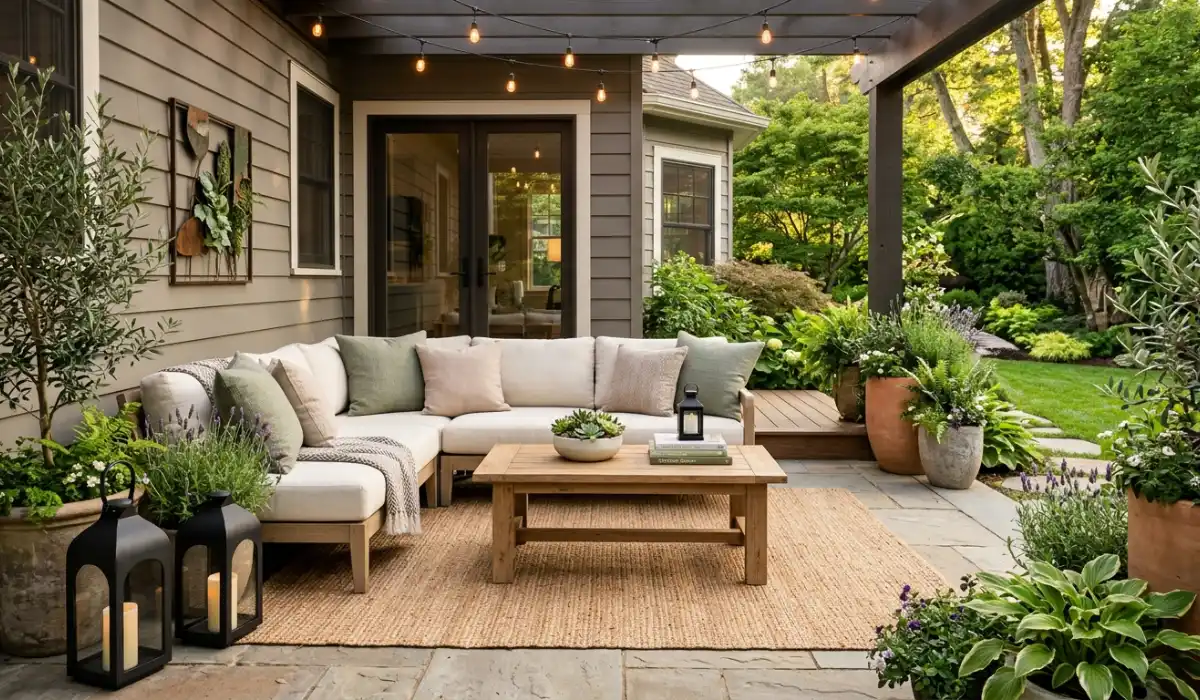
House decor outdoor is about making the areas around your home as welcoming, comfortable, and attractive as your indoor rooms. A front porch can feel more inviting with a few planters and a well-chosen doormat, while a backyard can become a relaxing retreat with comfortable seating, outdoor lighting, and coordinated garden accents.
The best approach is to decorate according to your available space, personal style, local climate, and budget. You do not need a large garden or an expensive renovation to create an appealing exterior. A few thoughtful changes can improve the appearance of a porch, patio, deck, balcony, or backyard without making the area feel crowded.
How to Plan Your Outdoor Decorating Style
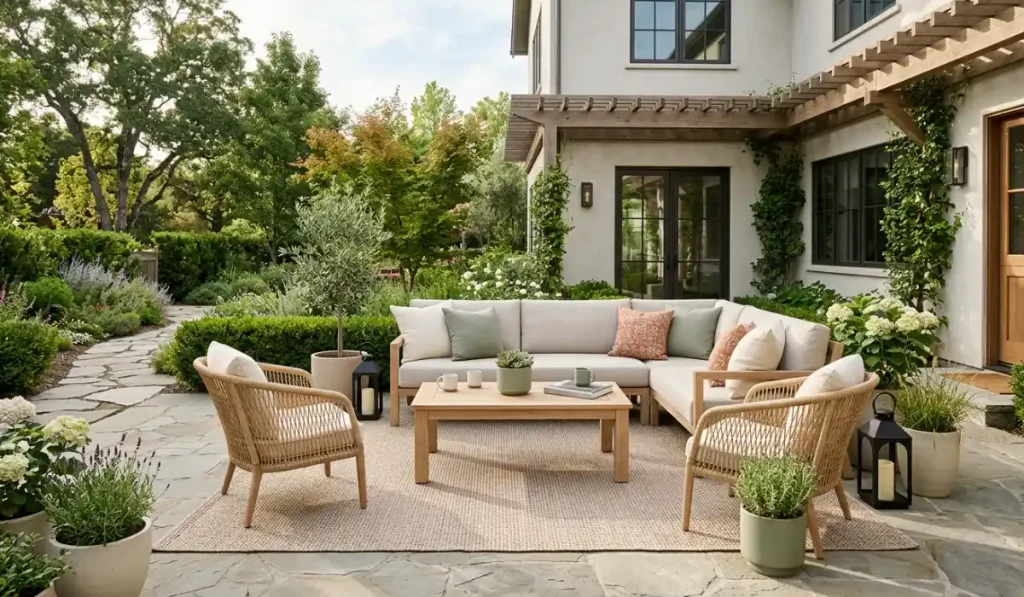
Before buying furniture or decorative accessories, decide how you want to use your outdoor space. A porch designed for morning coffee needs different furnishings from a backyard intended for family gatherings or outdoor dining.
Match the Decor to Your Home’s Architecture
Start with the exterior of your house. Traditional homes may suit classic lanterns, natural wood furniture, and symmetrical planters. Modern homes often pair well with clean lines, simple furniture, and restrained color combinations. Cottage-style homes can feel inviting with flowering containers, textured fabrics, and vintage-inspired accents.
You do not have to match every item perfectly. Instead, repeat a few colors, finishes, or materials to create a visual connection between your house and the surrounding space.
Choose a Coordinated Color Palette
A simple color palette makes outdoor decorating easier. Consider using one main neutral color, one complementary shade, and a smaller accent color.
For example:
- Beige, white, and olive green create a calm, natural appearance.
- Charcoal, cream, and muted blue work well for contemporary spaces.
- Terracotta, warm brown, and leafy green create an earthy garden atmosphere.
- Navy, white, and natural wood suit many coastal-inspired patios.
Use these colors across cushions, planters, rugs, and smaller accessories. You can introduce brighter seasonal colors without replacing your main furniture.
Measure the Space Before Buying Decor
Measure the available floor area and consider how much room furniture will occupy. Leave comfortable walking routes around tables, chairs, doors, and steps.
A large sectional may overwhelm a narrow porch, while a small bistro set can make a compact balcony useful. For larger yards, arrange furniture into separate areas instead of spreading it randomly across the space.
House Decor Outdoor Ideas for Every Area of Your Home
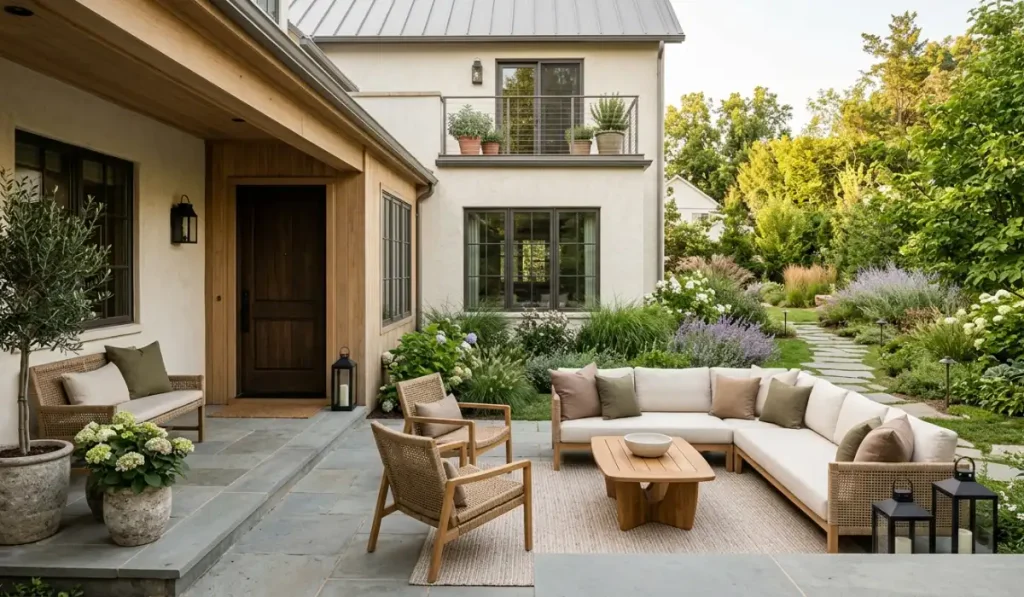
Each outdoor area has a different purpose. Choosing decorations that suit the location helps you create a more practical and attractive result.
Front Porch and Entryway Decor
The front entrance creates the first impression of your home. Even a small porch can look polished with a few carefully selected accessories.
Try these ideas:
- Place matching or complementary planters near the front door.
- Add a weather-appropriate doormat that fits the entrance.
- Use a simple wreath or door decoration that complements the exterior.
- Add a compact bench or pair of chairs if enough room is available.
- Install suitable exterior lighting to make the entrance welcoming after dark.
Keep the doorway and steps clear. If your porch is narrow, prioritize a doormat, one attractive planter, and a suitable light rather than filling every available corner.
Patio and Deck Decorating
A patio or deck can function like an additional living room when its furniture and accessories are arranged thoughtfully. Begin with the main seating area, then add smaller decorative details.
An outdoor rug can help define the seating arrangement. Cushions introduce color, while side tables provide space for drinks and books. Planters can soften the appearance of hard surfaces, especially on concrete patios and wooden decks.
Choose rugs, cushions, and furniture finishes intended for their actual outdoor exposure. Check product care instructions and move or cover vulnerable items when conditions require it.
Backyard renovation decoradyard Seating and Relaxation Areas
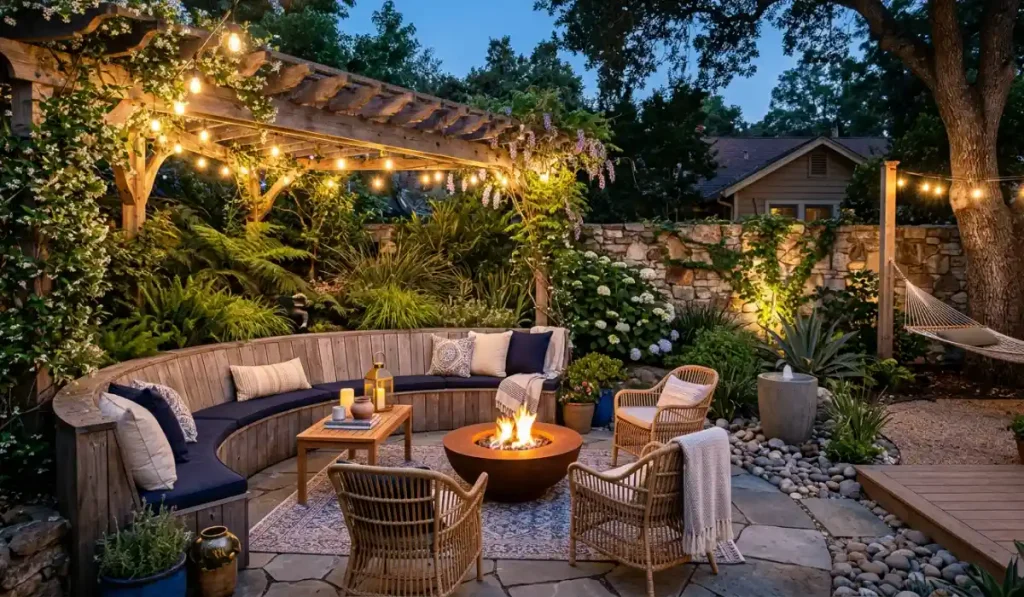
For a relaxing backyard, prioritize comfort before decorative extras. A pair of lounge chairs, a small table, and surrounding greenery can create a quiet reading spot. A larger yard may accommodate a conversation set with additional seating for guests.
Consider positioning chairs where people can enjoy a garden view or shade during the hours they usually use the space. A pergola, umbrella, or suitable shade structure can make the area more comfortable in sunny weather.
If your backyard is large, use planters, rugs, furniture arrangements, or changes in paving to distinguish the seating area from a dining space or garden.
Balcony and Small Outdoor Space Decor
Small balconies benefit from compact furniture and decorations that use vertical space. A folding bistro table, two lightweight chairs, or a narrow bench may provide enough seating without obstructing movement.
Wall-mounted planters and railing containers can introduce greenery while preserving floor space, provided they are permitted and securely installed. Before adding heavy pots, check any applicable building or balcony restrictions.
For small-space house decor outdoor projects, select a few useful items rather than buying many small ornaments. A coordinated set of planters, a compact outdoor rug, and soft lighting can create a complete look without clutter.
Create Comfortable Outdoor Seating With Textures and Accessories
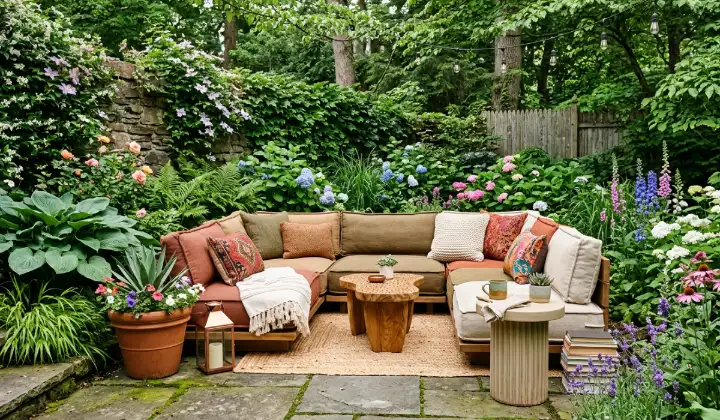
Comfortable furniture makes an outdoor area more useful, while accessories help it reflect your personal style. Start with the seating you need, then layer in a few textures and decorative details.
Add Outdoor Rugs, Cushions, and Poufs
Outdoor rugs can visually connect a group of chairs and a table. Choose a size that accommodates the furniture arrangement without creating awkward edges or obstructing doors.
Cushions and poufs introduce softness and color. Stripes, botanical prints, and subtle geometric patterns can add interest to neutral furniture. For a coordinated appearance, repeat one or two colors rather than mixing several unrelated patterns.
Look for products designed for outdoor use, and follow the manufacturer’s instructions for cleaning, drying, and storage.
Use Furniture That Serves More Than One Purpose
Multifunctional pieces are especially useful when storage space is limited. Consider a bench with built-in storage, a nesting table set, folding chairs, or an outdoor ottoman that can serve as extra seating.
Choose furniture that fits the space and is comfortable for its intended use. A practical arrangement usually looks better than a crowded collection of decorative furniture that rarely gets used.
Add Character With Outdoor Wall Decor
Bare exterior walls, fences, and sheltered porch walls can provide opportunities for decoration. The right accent can add personality without taking up valuable floor space.
Metal Wall Art and Decorative Panels
Metal botanical designs, geometric panels, and nature-inspired sculptures can complement outdoor furniture and garden plants. Choose finishes intended for the level of exposure where the item will be installed.
Secure wall decorations properly, especially in exposed locations where wind may place stress on mounting hardware. Avoid attaching heavy objects to surfaces that cannot safely support them.
Wall Planters and Vertical Gardens
Wall planters are useful for adding greenery to patios, balconies, and compact yards. Depending on the location, they can hold ornamental plants, herbs, or trailing varieties.
Before installation, consider sunlight, drainage, irrigation, and the weight of the planter when filled with wet soil. Use appropriate mounting systems and protect the wall from water damage.
Choose a Clear Focal Point
One substantial piece of wall art or a coordinated group of smaller decorations can create a focal point. Too many unrelated objects may make a small space feel busy.
Match the scale of the decoration to the wall. A large blank wall can accommodate a larger piece, while a narrow porch may look better with a modest accent.
Use Plants and Garden Decorations to Add Color
Plants bring color, texture, and seasonal variety to outdoor spaces. Even if you do not have a traditional garden, containers can add greenery to a porch, patio, or deck.
Arrange Planters at Different Heights
Combine containers of different heights and shapes to create a more interesting display. Place taller plants behind shorter varieties, and group a few pots near an entrance or seating area.
Choose plants according to your local growing conditions. Sun-loving flowers may struggle in deep shade, while some foliage plants can suffer in intense afternoon heat. Consider your USDA plant hardiness zone when choosing perennials, but also check local sunlight, soil, and moisture requirements.
Add Garden Statues and Natural Accents
Small sculptures, decorative stones, birdbaths, and weather-resistant ornaments can provide focal points among plants. Select pieces that complement the garden rather than compete with every other feature.
For a natural look, use materials such as stone, wood, terracotta, or finishes that resemble them. Keep the number of ornaments limited so that flowers and foliage remain prominent.
Incorporate Fountains and Water Features
A small fountain or birdbath can add visual interest to a garden or patio. Before choosing a water feature, consider its footprint, access to power if needed, cleaning requirements, and water management.
Place it where it can be enjoyed without obstructing a walkway. Maintain birdbaths and fountains regularly, and follow appropriate care guidance for the equipment and local wildlife.
Improve the Atmosphere With Outdoor Lighting
Lighting extends the usefulness of outdoor areas into the evening and highlights selected features. A thoughtful lighting plan combines practical illumination with decorative accents.
String Lights and Lanterns
String lights can create a relaxed atmosphere over a dining table or seating area. Lanterns can be placed on suitable tables or stable surfaces, while battery-operated options may work where electrical outlets are unavailable.
Use products rated for their intended outdoor conditions. Follow installation instructions, keep electrical connections protected as specified, and avoid hanging lights where they could obstruct movement or create hazards.
Pathway and Landscape Lighting
Low-level pathway lights can help make garden routes easier to navigate after dark. Spotlights can highlight a tree, planting bed, or architectural feature, while suitable wall fixtures can illuminate covered entrances.
Prioritize steps, changes in elevation, and frequently used paths. Avoid excessive brightness that creates glare or shines directly into neighboring windows.
Add Privacy and Shade Without Overcrowding the Space
Privacy screens, pergolas, umbrellas, and outdoor curtains can help define an outdoor living area. They can also provide a backdrop for plants and furniture.
For a small patio, a well-placed trellis with suitable climbing plants may offer a softer appearance than a solid screen. A patio umbrella can provide flexible shade, while a pergola can establish a more defined seating zone.
Before installing permanent structures, check applicable local building requirements, property restrictions, and installation guidance. In windy locations, ensure umbrellas and screens are secured appropriately, and close or store them when conditions require it.
Create an Inviting Outdoor Dining and Entertaining Area
An outdoor dining area does not need elaborate furniture to feel special. A table, comfortable chairs, simple tableware, and a few plants can create an attractive setting for family meals or gatherings.
Try these practical ideas:
- Use a centerpiece that does not block conversation.
- Add a lantern or suitable outdoor lighting for evening meals.
- Keep serving surfaces and walking routes clear.
- Use washable textiles and easy-to-clean accessories.
- Position dining furniture away from cooking smoke when possible.
If you add a grill or outdoor kitchen, follow the manufacturer’s safety instructions and applicable local fire requirements. Keep grills away from combustible surfaces and never use outdoor cooking equipment inside an enclosed space.
A fire pit can also create a gathering point, but its placement, fuel type, clearances, and use should comply with local regulations and manufacturer instructions.
Budget-Friendly House Decor Outdoor Ideas
You can improve your home’s exterior without replacing all your furniture or purchasing expensive decorations. Start with the areas that need the most attention, then make smaller updates over time.
Refresh Existing Furniture
Clean outdoor furniture according to its material and inspect it for damage. A suitable new finish, replacement cushion covers, or a fresh arrangement may improve its appearance without the cost of buying an entirely new set.
Before painting or refinishing furniture, confirm that the selected product is appropriate for the material and intended outdoor exposure.
Make Simple DIY Decorations
Affordable projects can add personality when they fit your home’s style. Consider:
- Grouping existing planters into a more balanced arrangement.
- Reusing suitable containers as decorative pots.
- Making a simple seasonal wreath for the front door.
- Refreshing an outdoor table with an easy-care centerpiece.
- Rearranging furniture and accessories you already own.
Keep safety and durability in mind. DIY items that remain outdoors should be able to withstand the conditions where they will be used.
Spend on the Items That Matter Most
Prioritize functional furniture, suitable lighting, and durable pieces that receive frequent use. Add decorative accessories gradually rather than buying everything at once.
This approach makes house decor outdoor projects easier to manage because you can evaluate each change before spending more money.
Choose Outdoor Decor That Suits Your Climate
The United States has a wide range of climates, from humid coastal areas to dry regions and places with freezing winters. A decoration that performs well on a covered porch may deteriorate more quickly when exposed to direct sun, heavy rain, or repeated freeze-thaw cycles.
Consider Sun, Rain, and Temperature
Before buying furniture or accessories, assess how much direct sunlight and moisture the area receives. UV exposure can fade some fabrics and finishes, while prolonged moisture may damage unsuitable materials.
In cold regions, check whether planters, ornaments, and water features can tolerate freezing temperatures. In hot areas, consider shade, heat-resistant surfaces, and materials that remain comfortable to touch.
Select Materials for Their Intended Use
| Material or item | What to consider |
|---|---|
| Metal furniture and wall art | Check corrosion resistance and finish suitability for local exposure. |
| Wood furniture | Follow guidance for sealing, cleaning, and protecting the specific wood. |
| Outdoor fabrics | Look for appropriate UV resistance, moisture performance, and cleaning instructions. |
| Ceramic and terracotta pots | Check whether the product is suitable for outdoor use in freezing conditions. |
| Plastic and resin accessories | Consider sun exposure, fading, brittleness, and wind stability. |
| Outdoor lighting | Choose fixtures rated for the installation location and exposure. |
No material is maintenance-free in every environment. Check product specifications before purchasing, and store or cover vulnerable accessories when recommended.
Maintain Decorations Through the Seasons
Regular care helps outdoor spaces remain attractive. Sweep away debris, clean furniture as directed, remove standing water where appropriate, and inspect mounting hardware and light fixtures.
For seasonal decorating, keep larger furniture and planters relatively neutral, then change smaller details such as cushions, wreaths, doormats, and flowers. This allows you to refresh the appearance without redesigning the entire area each season.
Common Outdoor Decorating Mistakes to Avoid
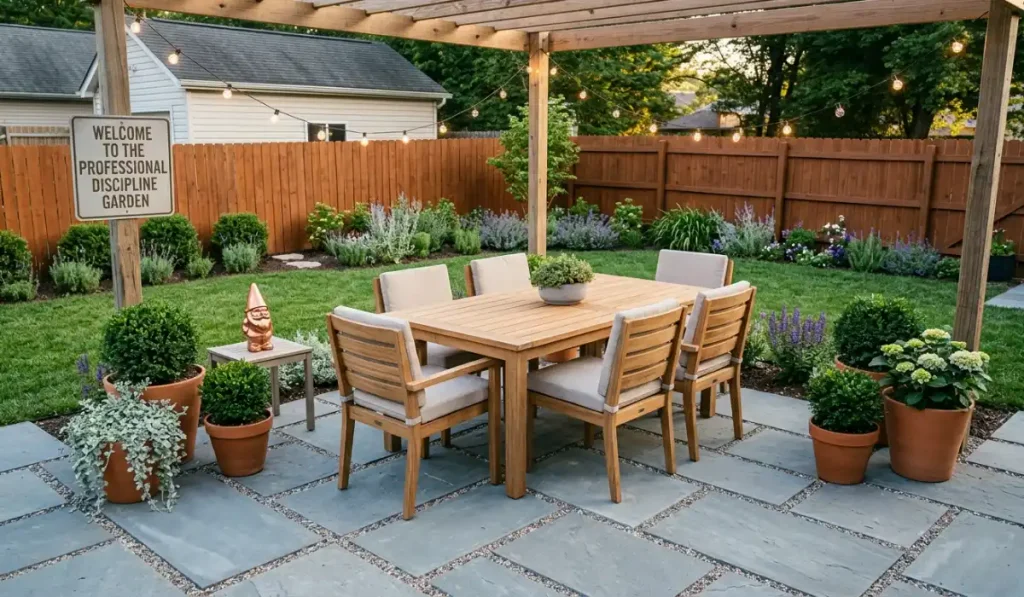
Even attractive accessories can look out of place if the arrangement is poorly planned. Avoid these common problems when decorating your home exterior.
- Overcrowding the space: Too much furniture or too many ornaments can restrict movement and reduce usable space.
- Mixing too many styles: Repeat a few colors and materials to create a more unified appearance.
- Ignoring weather exposure: Select products for the conditions they will actually face.
- Choosing furniture that is too large: Measure the area and consider the space needed to move chairs and open doors.
- Neglecting lighting: Make sure important routes and steps are adequately illuminated.
- Forgetting maintenance: Outdoor items need appropriate cleaning, inspection, and seasonal care.
- Blocking drainage: Keep drains and water outlets clear when arranging planters and furniture.
- Ignoring installation safety: Secure wall decor, umbrellas, screens, and other items according to their instructions.
A useful rule is to begin with the function of the space, then add decorations that support that purpose. A simple arrangement that works well often looks better than one filled with accessories.
Conclusion
Creating an attractive home exterior starts with understanding your space and choosing decorations that suit your needs. From welcoming porch accents and comfortable patio furniture to garden planters and outdoor lighting, small changes can make your surroundings more inviting.
The most effective house decor outdoor ideas balance appearance, comfort, durability, and budget. Choose a consistent color palette, select materials suited to your climate, and leave enough room for everyday activities. You can then update your outdoor space gradually, keeping the pieces that work and changing smaller accents as your preferences or the seasons change.
Frequently Asked Questions
1. How can I decorate my outdoor space on a budget?
Start by cleaning and rearranging existing furniture. Add a few affordable planters, refresh cushion covers, use simple DIY decorations, and improve lighting where needed. Focus on one area at a time rather than purchasing everything at once.
2. What decorations work best for a small patio?
Compact furniture, folding tables, vertical planters, outdoor rugs, and wall-mounted decorations are useful choices. Keep the layout simple, leave walking routes clear, and select accessories that serve a purpose.
3. How can I make my front porch look more inviting?
Begin with a clean entrance, a suitable doormat, and one or two attractive planters. If space permits, add a bench or small seating arrangement. Appropriate lighting and a coordinated door decoration can complete the look.
4. Which materials are best for outdoor decorations?
The right material depends on the climate, exposure, and intended use. Weather-resistant metals, appropriately treated wood, outdoor-rated fabrics, and suitable resin products are common options. Always check the manufacturer’s care and installation instructions.
5. How can I make outdoor decorations last longer?
Clean items according to their material, inspect them regularly, secure lightweight decorations, and protect vulnerable products from severe weather. Store cushions and seasonal accessories when recommended, and repair minor damage before it becomes worse.
6. How can I coordinate outdoor decor with my home’s exterior?
Choose two or three complementary colors and repeat them in planters, cushions, rugs, and accessories. Consider the home’s architectural style and existing exterior finishes. Consistent materials and colors help the porch, patio, and garden feel connected.
7. Can I decorate my outdoor space for every season?
Yes. Keep major furniture and durable accessories relatively versatile, then change seasonal flowers, wreaths, doormats, cushions, and smaller decorative accents. This makes seasonal updates easier and reduces the need to replace larger items.