
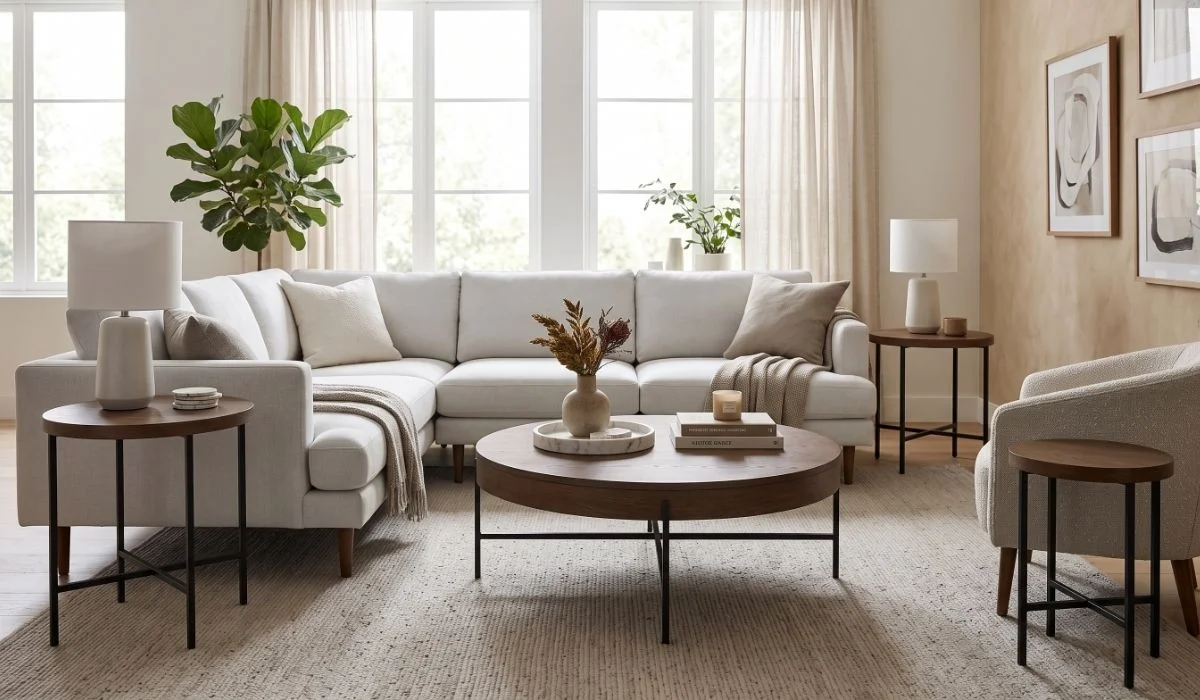
Living Room Table Set: Designs, Sizes & Buying Guide
A living room table set adds both style and functionality to your living space. The right combination of center and side tables can improve the room’s balance, provide useful surfaces, and keep the furniture looking coordinated.
Today, you can find many options, including wooden, metal, marble-look, round, rectangular, and nesting designs. Choosing the right set depends on your room size, sofa, interior style, and everyday needs.
This guide will help you understand the different options and choose a table set that fits your space comfortably.
What Is a Living Room Table Set?
A living room table set is a group of coordinated tables designed to work together in a seating area. It may include a center table with side tables, nesting tables, or pieces that share similar colors, materials, or finishes.
The main benefit is a more balanced and coordinated look. The tables do not have to be identical; different sizes and shapes can add visual interest while keeping the overall design connected.
A table set is also practical for everyday use. The center table can hold drinks, books, and decor, while smaller tables provide convenient surfaces beside sofas and chairs.
Why Choose a Living Room Table Set?
A living room table set is useful when your seating area has multiple positions. A center table may work well for the sofa but be difficult to reach from an armchair, while smaller companion tables provide convenient surfaces without taking up too much space.
Table sets also make furniture coordination easier because the pieces are designed to complement each other. They offer flexibility as well, especially nesting sets that can be separated when guests arrive and grouped together when more floor space is needed.
Types of Living Room Table Sets
Living room table sets come in different configurations, and each type offers different benefits. Choosing the right one depends on your room size, seating arrangement, and how you plan to use the tables.
Two-Piece Nesting Sets
Two-piece nesting sets include tables of different sizes that fit partly underneath each other. They are ideal for smaller rooms because they save space while providing extra surface area when needed.
Three-Piece Sets
Three-piece sets usually include a center table with two smaller tables. They provide more surface space and can be arranged around sofas and chairs when entertaining guests.
Center and Side Table Combinations
These sets combine a main center table with smaller side tables placed near seating areas. They work well in larger living rooms and create a coordinated, balanced appearance.
Matching Occasional Tables
Occasional table sets include smaller pieces that can be moved around the room as needed. They are a practical choice for flexible living spaces and informal interiors.
How to Choose the Right Size
Choosing the right size is essential for a comfortable and balanced living room. Before buying, measure your sofa, available floor space, seating height, and walking areas to make sure the table fits properly.
Match the Table to Your Sofa
A center table around two-thirds the length of your sofa is a useful starting point. The table should provide enough surface space without making the seating area feel crowded.
Consider Table Height
A center table usually works best when it is around the same height as the sofa seat or slightly lower. Always measure your sofa because different seating styles can require different table heights.
Leave Enough Clearance
Leave enough space between the sofa and table for comfortable movement and easy access. Around 14–18 inches is a practical starting point, but adjust the distance according to your room layout.
Which Table Shape Works Best?
Shape should respond to both the room and the furniture around it. There is no single best shape for every living room.
Rectangular Tables
Rectangular tables are among the most versatile options for conventional three-seat sofas. They provide generous surface area and naturally follow the horizontal line of a sofa.
A rectangular table is especially useful when the room has a longer seating arrangement. Designs with a lower shelf can also provide additional storage for books, baskets, or decorative pieces.
Round Tables
Round tables introduce softer visual lines and eliminate sharp corners. They can work especially well in smaller rooms or seating areas where people frequently walk around the table.
A round modern centre table design can also create a strong focal point without appearing as visually heavy as a large rectangular piece.
Square Tables
Square tables work well with symmetrical seating arrangements and large sectionals. Their balanced proportions can make a broad seating area feel cohesive.
However, they should not be placed in a way that blocks circulation. Their footprint can become substantial quickly, so measuring the surrounding area is essential.
Oval Tables
Oval designs combine some of the length of a rectangular table with the softer edges of a round table. They can be a useful choice when you want generous surface space without introducing sharp corners.
They also work well in transitional interiors where furniture mixes traditional and contemporary elements.
Materials to Consider
The material of a living room table affects its appearance, durability, maintenance, and overall style. Consider your lifestyle and existing furniture before making a choice.
Solid Wood
Wooden tables add warmth and work well with traditional, modern, and Scandinavian interiors. Check whether the table is made from solid wood or a combination of engineered materials before buying.
Metal
Metal frames give tables a modern and structured look. They can be paired with glass, wood-look, or marble-look tops for a stylish contemporary design.
Glass
Glass tables create a light and open appearance, making them suitable for smaller spaces. However, they require regular cleaning and careful handling.
Marble and Marble-Look Tops
Marble provides a sophisticated appearance, while marble-look surfaces can offer a similar style with different maintenance and price considerations. Always follow the recommended care instructions.
Mixed Materials
Combining materials such as metal and wood or metal and stone-look surfaces can add contrast and character. These designs also make it easier to connect the table with other furniture and decor.
Modern Living Room Table Design Ideas
A good living room table design should complement the room’s existing style without overwhelming it. The right shape, material, and finish can add both function and visual appeal.
Minimalist Designs
Minimalist tables feature clean lines, simple shapes, and limited decoration. They work well in rooms with patterned furniture, artwork, or other noticeable elements.
Geometric Frames
X-shaped, C-shaped, and circular bases add character to modern tables. If the frame is bold, keep the surrounding decor simple for a balanced look.
Marble-Look and Gold Combinations
Stone-look tops with gold or dark metal frames create a polished contemporary style. Repeating the same metallic finish in small decor pieces can make the room feel more coordinated.
Nesting Designs
Nesting tables offer both flexibility and style. They can be grouped together to save space or separated when extra surfaces are needed, making them especially useful for modern living rooms.
How to Match a Table Set With Your Interior
The easiest way to coordinate a table set is to look for relationships rather than exact matches.
If your sofa is neutral, the table can introduce texture or contrast. If the sofa already has a strong color or pattern, a simpler table may create better balance.
Consider these combinations:
| Living Room Style | Suitable Table Direction |
| Modern | Clean metal, glass, marble-look, geometric |
| Minimalist | Simple wood, slim metal, restrained finishes |
| Traditional | Rich wood, classic legs, warm finishes |
| Scandinavian | Light wood, rounded edges, simple forms |
| Industrial | Dark metal, reclaimed-look wood, strong frames |
| Contemporary luxury | Marble-look tops, metallic accents, sculptural bases |
| Small apartment | Round, nesting, slim-profile designs |
The table should also relate to your rug. A very small table floating on a large rug can look disconnected, while an oversized table may overpower the pattern.
Think of the sofa, rug, table, lighting, and surrounding furniture as one composition rather than individual purchases.
Best Options for Small Living Rooms
Small rooms benefit from furniture that performs more than one job.
A nesting set is one of the easiest solutions because the smaller tables can be stored underneath the larger one. Round tables can also improve circulation by eliminating corners that are easy to bump into.
Choose lighter visual profiles when possible. A table with a thin frame or open base can make the floor feel less crowded than a bulky enclosed design.
Another useful strategy is to prioritize movable pieces. If your living room also functions as a dining, working, or entertaining area, a lightweight table set may be more practical than one heavy permanent center table.
Functional Features Worth Considering
A table should not be judged only by its appearance. Think about what you will actually do with it.
Storage
Lower shelves, drawers, and hidden compartments can help control clutter. Storage is particularly useful for remotes, magazines, books, board games, or small everyday items.
However, storage should not automatically be considered better. Open shelves can become cluttered quickly, while hidden compartments may be more convenient for maintaining a clean appearance.
Mobility
Lightweight tables are easier to move when cleaning or rearranging furniture. This can be valuable in multifunctional living rooms.
Nesting Capability
Nesting is useful when surface area needs change throughout the day. Keep the smaller table tucked away during normal use and pull it out when additional seating or serving space is needed.
Surface Durability
Ask how the tabletop reacts to moisture, heat, scratches, and cleaning products. A beautiful finish that requires extremely delicate treatment may not be appropriate for a busy family room.
Expert Insights for Choosing a Table Set
When choosing a table set, always consider your actual room size, sofa, and daily needs instead of judging only by product photos. Measure the sofa, available floor space, walking paths, and table dimensions to make sure everything fits comfortably.
Before buying, check the table’s material, frame, joints, finish, and overall stability. A quality table should not only look attractive but also provide durability, easy maintenance, and practical functionality for everyday use.
Benefits of a Well-Chosen Living Room Table Set
A properly selected set can improve the room in several ways.
Better Visual Balance
Matching or coordinated tables help connect separate seating pieces into one cohesive arrangement.
More Usable Surface Area
Multiple tables provide more places for drinks, books, snacks, lamps, decorative objects, and everyday items.
Greater Flexibility
Nesting and multi-piece sets can be rearranged according to the occasion.
Better Space Management
Instead of buying several unrelated pieces, a coordinated set can provide the required functionality while maintaining a consistent visual language.
Stronger Interior Design
A table set can introduce contrast, texture, color, or material without requiring major renovations.
Common Buying Mistakes
Choosing by Appearance Alone
A table can look perfect online but be completely wrong for your sofa or room.
Always check dimensions before ordering.
Buying a Table That Is Too Large
Oversized furniture is one of the quickest ways to make a living room feel crowded.
Measure the usable seating zone rather than relying on the total room size.
Ignoring Height
A table that is dramatically higher or lower than the sofa seat may feel awkward during everyday use.
Measure your sofa rather than assuming a standard height will work.
Forgetting Walking Space
Furniture placement affects how people move through the room. Never fill every available area simply because the furniture technically fits.
Mixing Too Many Finishes
A room can quickly become visually chaotic when the tables, lighting, handles, sofa details, and accessories all use unrelated finishes.
Choose one or two recurring materials or finishes to create cohesion.
Prioritizing Trends Over Lifestyle
A delicate glass table may look beautiful but may not be practical for a home with young children. Likewise, a heavily detailed table may be unnecessary in a minimalist space.
The best table is the one that fits both your design taste and your daily routine.
How to Maintain Your Tables
Proper maintenance helps keep your living room tables attractive and durable. Dust them regularly, clean spills quickly, and always use cleaning products suitable for the specific material.
Protect wooden surfaces from excess moisture and heat, clean glass with a soft cloth, and handle metal finishes gently to avoid scratches. Also, check screws, joints, and fittings occasionally to keep the table stable and secure.
Future Trends in Living Room Tables
Future living room tables are moving toward flexibility, multifunctionality, and smart space use. Nesting tables, built-in storage, and movable designs are becoming popular because they can adapt to different room layouts and everyday needs.
Mixed-material designs using metal, wood, glass, and stone-look finishes will continue to influence modern furniture. At the same time, buyers are paying more attention to durability, sustainable materials, and long-lasting designs.
Overall, future table designs will focus on combining attractive style with practical features, making them suitable for both spacious homes and smaller living areas.
Conclusion
Choosing the right living room table set is ultimately about finding the balance between design, proportion, comfort, and everyday practicality.
Start with measurements rather than trends. Consider your sofa length and height, leave enough space for movement, and select a shape that complements the room. Then compare materials, storage features, finishes, and maintenance requirements.
For compact rooms, nesting or round tables can provide flexibility without overwhelming the floor plan. For larger spaces, a coordinated center-and-side-table arrangement can create stronger visual balance and more usable surface area.
Most importantly, choose a set that reflects how you actually use your living room. The best furniture is not simply attractive it makes the entire space easier and more enjoyable to live in.
FAQs
1. What is the best size for a living room table set?
Choose a table set that suits your sofa size and leaves enough space for comfortable movement.
2. How high should a living room center table be?
It should usually be around the same height as the sofa seat or slightly lower.
3. Are nesting tables good for small living rooms?
Yes, nesting tables save space and provide extra surfaces when needed.
4. Which is better: a round or rectangular table?
Rectangular tables suit larger seating areas, while round tables work well in compact rooms.
5. What material is best for a living room table?
Wood, metal, glass, and marble-look materials are popular choices depending on your style and needs.
6. How much space should be between a sofa and coffee table?
Keeping around 14–18 inches between them usually provides comfortable access and movement.
7. Can a table set work with a sectional sofa?
Yes, choose a proportional set that complements the sectional without restricting movement.
8. What is a modern centre table design?
It typically features clean lines, simple shapes, and contemporary materials.


One Comment